ASX Glossary - E: Difference between revisions
Jump to navigation
Jump to search
No edit summary |
No edit summary |
||
| Line 148: | Line 148: | ||
</head> | </head> | ||
<body> | <body> | ||
<table> | |||
<tr | <tr> | ||
<td class="term"> | |||
<a href="https://wiki.alsresume.com/index.php?title= | <a href="https://wiki.alsresume.com/index.php?title=EADI_(Electronic_Attitude_Direction_Indicator)" target="_blank" | ||
style="color: #40E0D0; font-weight: bold; text-decoration: none; cursor: pointer;" | style="color: #40E0D0; font-weight: bold; text-decoration: none; cursor: pointer;" | ||
onmouseover="this.style.color='#ff4f01';" | onmouseover="this.style.color='#ff4f01';" | ||
onmouseout="this.style.color='#40E0D0';"> | onmouseout="this.style.color='#40E0D0';">EADI (Electronic Attitude Direction Indicator) | ||
</a> | |||
</a | |||
</td> | </td> | ||
<td class="description">The EADI is a digital flight instrument that displays an aircraft’s attitude relative to the horizon. It integrates essential flight data such as pitch, roll, and bank angles, improving situational awareness for pilots. It replaces traditional mechanical attitude indicators, offering enhanced reliability and clearer visual representation of flight parameters.</td> | |||
<td class="image-column"><img src="https://www.alsresume.com/wp-content/uploads/2025/02/EADI.jpg" alt="EADI (Electronic Attitude Direction Indicator)"></td> | |||
</tr> | </tr> | ||
<tr | <tr> | ||
<td class="term"> | <td class="term"> | ||
<a href="https://wiki.alsresume.com/index.php?title= | <a href="https://wiki.alsresume.com/index.php?title=Equivalent_airspeed" target="_blank" | ||
style="color: #40E0D0; font-weight: bold; text-decoration: none; cursor: pointer;" | style="color: #40E0D0; font-weight: bold; text-decoration: none; cursor: pointer;" | ||
onmouseover="this.style.color='#ff4f01';" | onmouseover="this.style.color='#ff4f01';" | ||
onmouseout="this.style.color='#40E0D0';"> | onmouseout="this.style.color='#40E0D0';">EAS (Equivalent Airspeed) | ||
</a> | </a> | ||
</td> | </td> | ||
<td class="description"> | <td class="description">Equivalent airspeed is the calibrated airspeed corrected for compressibility effects at higher altitudes. It provides a more accurate representation of aerodynamic performance than indicated airspeed. EAS is especially important for high-speed aircraft, as it accounts for variations in air density that affect flight characteristics at different altitudes.</td> | ||
<td class="image-column"><img src="https://www.alsresume.com/wp-content/uploads/2025/02/EAS.jpg" alt="EAS (Equivalent Airspeed)"></td> | |||
<td class="image-column"> | |||
</tr> | </tr> | ||
<tr | <tr> | ||
<td class="term"> | <td class="term"> | ||
<a href="https://wiki.alsresume.com/index.php?title= | <a href="https://wiki.alsresume.com/index.php?title=Echelon_formation" target="_blank" | ||
style="color: #40E0D0; font-weight: bold; text-decoration: none; cursor: pointer;" | style="color: #40E0D0; font-weight: bold; text-decoration: none; cursor: pointer;" | ||
onmouseover="this.style.color='#ff4f01';" | onmouseover="this.style.color='#ff4f01';" | ||
onmouseout="this.style.color='#40E0D0';"> | onmouseout="this.style.color='#40E0D0';">Echelon Formation | ||
</a> | </a> | ||
</td> | </td> | ||
<td class="description"> | <td class="description">A flight formation in which aircraft fly diagonally to one side of a lead aircraft. This configuration is used in military operations and airshows to maintain visibility, control spacing, and facilitate tactical maneuvers. The echelon formation improves situational awareness while allowing rapid response to changes in flight conditions.</td> | ||
<td class="image-column"><img src="https://www.alsresume.com/wp-content/uploads/2025/02/Echelon.jpg" alt="Echelon Formation"></td> | |||
<td class="image-column"> | |||
</tr> | </tr> | ||
<tr | <tr> | ||
<td class="term"> | <td class="term"> | ||
<a href="https://wiki.alsresume.com/index.php?title= | <a href="https://wiki.alsresume.com/index.php?title=FADEC" target="_blank" | ||
style="color: #40E0D0; font-weight: bold; text-decoration: none; cursor: pointer;" | style="color: #40E0D0; font-weight: bold; text-decoration: none; cursor: pointer;" | ||
onmouseover="this.style.color='#ff4f01';" | onmouseover="this.style.color='#ff4f01';" | ||
onmouseout="this.style.color='#40E0D0';"> | onmouseout="this.style.color='#40E0D0';">ECU (Engine Control Unit) | ||
</a> | </a> | ||
</td> | </td> | ||
<td class="description"> | <td class="description">The ECU is a computerized system that manages an aircraft engine’s performance, adjusting fuel flow, ignition timing, and other critical parameters. It enhances fuel efficiency, reliability, and engine longevity by continuously monitoring and optimizing operations based on flight conditions, pilot inputs, and system feedback.</td> | ||
<td class="image-column"><img src="https://www.alsresume.com/wp-content/uploads/2025/02/ECU.jpg" alt="ECU (Engine Control Unit)"></td> | |||
<td class="image-column"> | |||
</tr> | </tr> | ||
<tr | <tr> | ||
<td class="term"> | <td class="term"> | ||
<a href="https://wiki.alsresume.com/index.php?title= | <a href="https://wiki.alsresume.com/index.php?title=Avionics" target="_blank" | ||
style="color: #40E0D0; font-weight: bold; text-decoration: none; cursor: pointer;" | style="color: #40E0D0; font-weight: bold; text-decoration: none; cursor: pointer;" | ||
onmouseover="this.style.color='#ff4f01';" | onmouseover="this.style.color='#ff4f01';" | ||
onmouseout="this.style.color='#40E0D0';"> | onmouseout="this.style.color='#40E0D0';">EDTO (Extended Diversion Time Operations) | ||
</a> | </a> | ||
</td> | </td> | ||
<td class="description"> | <td class="description">Formerly known as ETOPS (Extended Twin Operations), EDTO refers to regulatory guidelines for twin-engine aircraft operating long-haul routes over oceanic or remote areas. It dictates how far an aircraft can fly from the nearest suitable airport in case of an engine failure, ensuring safety in extended-range operations.</td> | ||
<td class="image-column"><img src="https://www.alsresume.com/wp-content/uploads/2025/02/EDTO.jpg" alt="EDTO (Extended Diversion Time Operations)"></td> | |||
<td class="image-column"> | |||
</tr> | </tr> | ||
<tr id=" | <tr id="edwards-north-base"> | ||
<td class="term"> | <td class="term">Edwards North Base</td> | ||
<td class="description"> | <td class="description"> | ||
Edwards North Base (<span style="color: #00ff01; font-weight: bold; text-decoration: none; cursor: pointer;" | |||
onmouseover="this.style.color='#ff4f01';" | |||
onmouseout="this.style.color='#00ff01';" | |||
onclick="window.open('https://www.google.com/maps/@34.989486,-117.862581,15z/data=!3m1!1e3', '_blank')">N34°59'22.15" W117°51'45.29"</span>) is a highly restricted section of Edwards Air Force Base, located just north of the main complex. The base is used for classified flight testing, including advanced aircraft and drone programs. Often overshadowed by Area 51, North Base remains central to black project development and high-security aerospace operations deep within the Mojave Desert. | |||
</td> | </td> | ||
<td class="image-column"><img src="https://www.alsresume.com/wp-content/uploads/2025/03/edwards-north-base.jpg" alt="Edwards North Base"></td> | |||
</tr> | </tr> | ||
<tr> | <tr> | ||
<td class="term"> | <td class="term"> | ||
<a href="https://wiki.alsresume.com/index.php?title= | <a href="https://wiki.alsresume.com/index.php?title=Electronic_flight_instrument_system" target="_blank" | ||
style="color: #40E0D0; font-weight: bold; text-decoration: none; cursor: pointer;" | style="color: #40E0D0; font-weight: bold; text-decoration: none; cursor: pointer;" | ||
onmouseover="this.style.color='#ff4f01';" | onmouseover="this.style.color='#ff4f01';" | ||
onmouseout="this.style.color='#40E0D0';"> | onmouseout="this.style.color='#40E0D0';">EFIS (Electronic Flight Instrument System) | ||
</a> | </a> | ||
</td> | </td> | ||
<td class="description"> | <td class="description">EFIS is an advanced cockpit display system that replaces traditional analog gauges with digital screens. It integrates flight data such as altitude, speed, heading, and navigation into a user-friendly interface. EFIS improves situational awareness, reduces pilot workload, and enhances safety by providing real-time flight information.</td> | ||
<td class="image-column"><img src="https://www.alsresume.com/wp-content/uploads/2025/02/ | <td class="image-column"><img src="https://www.alsresume.com/wp-content/uploads/2025/02/EFIS.jpg" alt="EFIS (Electronic Flight Instrument System)"></td> | ||
</tr> | </tr> | ||
<tr | <tr> | ||
<td class="term"> | <td class="term"> | ||
<a href="https://wiki.alsresume.com/index.php?title= | <a href="https://wiki.alsresume.com/index.php?title=Ground_proximity_warning_system" target="_blank" | ||
style="color: #40E0D0; font-weight: bold; text-decoration: none; cursor: pointer;" | style="color: #40E0D0; font-weight: bold; text-decoration: none; cursor: pointer;" | ||
onmouseover="this.style.color='#ff4f01';" | onmouseover="this.style.color='#ff4f01';" | ||
onmouseout="this.style.color='#40E0D0';"> | onmouseout="this.style.color='#40E0D0';">EGPWS (Enhanced Ground Proximity Warning System) | ||
</a> | </a> | ||
</td> | </td> | ||
<td class="description"> | <td class="description">The EGPWS is an advanced safety system designed to prevent controlled flight into terrain (CFIT). It provides visual and auditory alerts if an aircraft is too close to the ground or terrain obstacles. EGPWS uses GPS, altitude, and airspeed data to enhance situational awareness and prevent accidents.</td> | ||
<td class="image-column"><img src="https://www.alsresume.com/wp-content/uploads/2025/02/EPWS.jpg" alt="EGPWS (Enhanced Ground Proximity Warning System)"></td> | |||
<td class="image-column"> | |||
</tr> | </tr> | ||
<tr | <tr> | ||
<td class="term"> | <td class="term"> | ||
<a href="https://wiki.alsresume.com/index.php?title= | <a href="https://wiki.alsresume.com/index.php?title=Elevator_(aeronautics)" target="_blank" | ||
style="color: #40E0D0; font-weight: bold; text-decoration: none; cursor: pointer;" | style="color: #40E0D0; font-weight: bold; text-decoration: none; cursor: pointer;" | ||
onmouseover="this.style.color='#ff4f01';" | onmouseover="this.style.color='#ff4f01';" | ||
onmouseout="this.style.color='#40E0D0';"> | onmouseout="this.style.color='#40E0D0';">Elevator | ||
</a> | </a> | ||
</td> | </td> | ||
<td class="description"> | <td class="description">The elevator is a movable control surface located on an aircraft’s horizontal stabilizer. It controls pitch movement, allowing the aircraft to climb or descend. By adjusting the elevator’s position, pilots regulate the angle of attack, maintaining stability and controlling altitude changes during flight.</td> | ||
<td class="image-column"><img src="https://www.alsresume.com/wp-content/uploads/2025/02/Elevator.jpg" alt="Elevator"></td> | |||
<td class="image-column"> | |||
</tr> | </tr> | ||
<tr | <tr> | ||
<td class="term"> | <td class="term"> | ||
<a href="https://wiki.alsresume.com/index.php?title= | <a href="https://wiki.alsresume.com/index.php?title=Emergency_position-indicating_radiobeacon" target="_blank" | ||
style="color: #40E0D0; font-weight: bold; text-decoration: none; cursor: pointer;" | style="color: #40E0D0; font-weight: bold; text-decoration: none; cursor: pointer;" | ||
onmouseover="this.style.color='#ff4f01';" | onmouseover="this.style.color='#ff4f01';" | ||
onmouseout="this.style.color='#40E0D0';"> | onmouseout="this.style.color='#40E0D0';">ELT (Emergency Locator Transmitter) | ||
</a> | </a> | ||
</td> | </td> | ||
<td class="description"> | <td class="description">An ELT is a distress beacon that transmits a location signal in the event of an aircraft crash or emergency landing. It operates on international emergency frequencies, enabling search and rescue teams to locate the aircraft quickly. Modern ELTs use GPS technology for precise positioning and faster response times.</td> | ||
<td class="image-column"><img src="https://www.alsresume.com/wp-content/uploads/2025/02/ELT.jpg" alt="Thumbnail"></td> | |||
<td class="image-column"> | |||
</tr> | </tr> | ||
<tr | <tr> | ||
<td class="term"> | <td class="term"> | ||
<a href="https://wiki.alsresume.com/index.php?title= | <a href="https://wiki.alsresume.com/index.php?title=Embankment_Effect" target="_blank" | ||
style="color: #40E0D0; font-weight: bold; text-decoration: none; cursor: pointer;" | style="color: #40E0D0; font-weight: bold; text-decoration: none; cursor: pointer;" | ||
onmouseover="this.style.color='#ff4f01';" | onmouseover="this.style.color='#ff4f01';" | ||
onmouseout="this.style.color='#40E0D0';"> | onmouseout="this.style.color='#40E0D0';">Embankment Effect | ||
</a> | </a> | ||
</td> | </td> | ||
<td class="description"> | <td class="description">A phenomenon where an aircraft experiences altered airflow when flying close to raised terrain, such as hills or embankments. This effect can cause changes in lift and stability, requiring pilots to make adjustments in altitude and power settings to compensate for variations in aerodynamic forces.</td> | ||
<td class="image-column"><img src="https://www.alsresume.com/wp-content/uploads/2025/02/Embankment-Effect.jpg" alt="Embankment Effectl"></td> | |||
<td class="image-column"> | |||
</tr> | </tr> | ||
<tr | <tr> | ||
<td class="term"> | <td class="term"> | ||
<a href="https:// | <a href="https://wiki.alsresume.com/index.php?title=Descent_(aeronautics)" target="_blank" | ||
style="color: #40E0D0; font-weight: bold; text-decoration: none; cursor: pointer;" | style="color: #40E0D0; font-weight: bold; text-decoration: none; cursor: pointer;" | ||
onmouseover="this.style.color='#ff4f01';" | onmouseover="this.style.color='#ff4f01';" | ||
onmouseout="this.style.color='#40E0D0';"> | onmouseout="this.style.color='#40E0D0';">Emergency Descent | ||
</a> | </a> | ||
</td> | </td> | ||
<td class="description"> | <td class="description">An emergency descent is a rapid, controlled descent performed when an aircraft needs to reach a lower altitude quickly. This maneuver is often used during cabin depressurization, smoke, or fire emergencies. Pilots follow standard procedures to minimize risks while ensuring passenger and crew safety.</td> | ||
<td class="image-column"><img src="https://www.alsresume.com/wp-content/uploads/2025/02/Emergency-Descent.jpg" alt="Emergency Descent"></td> | |||
<td class="image-column"> | |||
</tr> | </tr> | ||
<tr | <tr> | ||
<td class="term"> | <td class="term"> | ||
<a href="https://wiki.alsresume.com/index.php?title= | <a href="https://wiki.alsresume.com/index.php?title=Emergency_aircraft_evacuation" target="_blank" | ||
style="color: #40E0D0; font-weight: bold; text-decoration: none; cursor: pointer;" | style="color: #40E0D0; font-weight: bold; text-decoration: none; cursor: pointer;" | ||
onmouseover="this.style.color='#ff4f01';" | onmouseover="this.style.color='#ff4f01';" | ||
onmouseout="this.style.color='#40E0D0';"> | onmouseout="this.style.color='#40E0D0';">Emergency Evacuation | ||
</a> | </a> | ||
</td> | </td> | ||
<td class="description"> | <td class="description">Emergency evacuation refers to the rapid and orderly exit of passengers and crew from an aircraft in case of an accident, fire, or other hazardous situations. It follows strict safety procedures, utilizing emergency exits, evacuation slides, and crew instructions to ensure a swift and safe evacuation.</td> | ||
<td class="image-column"><img src="https://www.alsresume.com/wp-content/uploads/2025/02/Emergency-Evacuation.jpg" alt="Emergency Evacuation"></td> | |||
<td class="image-column"> | |||
</tr> | </tr> | ||
<tr | <tr> | ||
<td class="term"> | <td class="term"> | ||
<a href="https://wiki.alsresume.com/index.php?title= | <a href="https://wiki.alsresume.com/index.php?title=Emergency_exit#Aircraft" target="_blank" | ||
style="color: #40E0D0; font-weight: bold; text-decoration: none; cursor: pointer;" | style="color: #40E0D0; font-weight: bold; text-decoration: none; cursor: pointer;" | ||
onmouseover="this.style.color='#ff4f01';" | onmouseover="this.style.color='#ff4f01';" | ||
onmouseout="this.style.color='#40E0D0';"> | onmouseout="this.style.color='#40E0D0';">Emergency Exit | ||
</a> | </a> | ||
</td> | </td> | ||
<td class="description"> | <td class="description">A designated door or hatch in an aircraft used for rapid evacuation during emergencies. Emergency exits are equipped with lighting, escape slides, and markings to guide passengers to safety. Regulations require that all emergency exits be easily accessible and operational under all conditions.</td> | ||
<td class="image-column"><img src="https://www.alsresume.com/wp-content/uploads/2025/02/Emergency-Exit.jpg" alt="Emergency Exit"></td> | |||
<td class="image-column"> | |||
</tr> | </tr> | ||
<tr | <tr> | ||
<td class="term"> | <td class="term"> | ||
<a href="https://wiki.alsresume.com/index.php?title= | <a href="https://wiki.alsresume.com/index.php?title=Engine_failure_on_takeoff" target="_blank" | ||
style="color: #40E0D0; font-weight: bold; text-decoration: none; cursor: pointer;" | style="color: #40E0D0; font-weight: bold; text-decoration: none; cursor: pointer;" | ||
onmouseover="this.style.color='#ff4f01';" | onmouseover="this.style.color='#ff4f01';" | ||
onmouseout="this.style.color='#40E0D0';"> | onmouseout="this.style.color='#40E0D0';">Engine Failure | ||
</a> | </a> | ||
</td> | </td> | ||
<td class="description"> | <td class="description">Engine failure occurs when an aircraft’s engine stops functioning due to mechanical, electrical, or fuel-related issues. Pilots follow specific emergency checklists to attempt a restart or conduct a safe landing. Multi-engine aircraft are designed to continue flying safely on one operational engine when necessary.</td> | ||
<td class="image-column"><img src="https://www.alsresume.com/wp-content/uploads/2025/02/Engine-Failure.jpg" alt="Engine Failure"></td> | |||
<td class="image-column"> | |||
</tr> | </tr> | ||
<tr | <tr> | ||
<td class="term"> | <td class="term"> | ||
<a href="https://wiki.alsresume.com/index.php?title= | <a href="https://wiki.alsresume.com/index.php?title=Engine_Fire_Suppression_System" target="_blank" | ||
style="color: #40E0D0; font-weight: bold; text-decoration: none; cursor: pointer;" | style="color: #40E0D0; font-weight: bold; text-decoration: none; cursor: pointer;" | ||
onmouseover="this.style.color='#ff4f01';" | onmouseover="this.style.color='#ff4f01';" | ||
onmouseout="this.style.color='#40E0D0';"> | onmouseout="this.style.color='#40E0D0';">Engine Fire Suppression System | ||
</a> | </a> | ||
</td> | </td> | ||
<td class="description"> | <td class="description">A safety mechanism installed in aircraft engines to detect and extinguish fires. It uses fire detectors, extinguishing agents, and automatic shutoff valves to prevent the spread of flames. Proper maintenance and quick pilot response are essential to ensure the system functions effectively in an emergency.</td> | ||
<td class="image-column"><img src="https://www.alsresume.com/wp-content/uploads/2025/02/Engine-fire.jpg" alt="Engine Fire Suppression System"></td> | |||
<td class="image-column"> | |||
</tr> | </tr> | ||
<tr | <tr> | ||
<td class="term"> | <td class="term"> | ||
<a href="https://wiki.alsresume.com/index.php?title= | <a href="https://wiki.alsresume.com/index.php?title=Intake#Aircraft_intakes" target="_blank" | ||
style="color: #40E0D0; font-weight: bold; text-decoration: none; cursor: pointer;" | style="color: #40E0D0; font-weight: bold; text-decoration: none; cursor: pointer;" | ||
onmouseover="this.style.color='#ff4f01';" | onmouseover="this.style.color='#ff4f01';" | ||
onmouseout="this.style.color='#40E0D0';"> | onmouseout="this.style.color='#40E0D0';">Engine Inlet | ||
</a> | </a> | ||
</td> | </td> | ||
<td class="description"> | <td class="description">The engine inlet is the opening at the front of a jet engine that directs airflow into the compressor. It is designed to optimize airflow efficiency while minimizing turbulence and drag. Proper inlet design improves engine performance, fuel efficiency, and thrust generation.</td> | ||
<td class="image-column"><img src="https://www.alsresume.com/wp-content/uploads/2025/02/Engine-Inlet.jpg" alt="Engine Inlet"></td> | |||
<td class="image-column"> | |||
</tr> | </tr> | ||
<tr | <tr> | ||
<td class="term"> | <td class="term"> | ||
<a href="https://wiki.alsresume.com/index.php?title= | <a href="https://wiki.alsresume.com/index.php?title=Flight_envelope_protection" target="_blank" | ||
style="color: #40E0D0; font-weight: bold; text-decoration: none; cursor: pointer;" | style="color: #40E0D0; font-weight: bold; text-decoration: none; cursor: pointer;" | ||
onmouseover="this.style.color='#ff4f01';" | onmouseover="this.style.color='#ff4f01';" | ||
onmouseout="this.style.color='#40E0D0';"> | onmouseout="this.style.color='#40E0D0';">Envelope Protection | ||
</a> | </a> | ||
</td> | </td> | ||
<td class="description"> | <td class="description">Envelope protection is an automated system that prevents an aircraft from exceeding its performance limits, such as stall, over-speed, or excessive pitch. It is integrated into modern fly-by-wire aircraft to enhance safety by providing real-time corrections while allowing pilots full manual control within safe operating parameters.</td> | ||
<td class="image-column"><img src="https://www.alsresume.com/wp-content/uploads/2025/02/Envelope-protection.jpg" alt="Envelope Protection"></td> | |||
<td class="image-column"> | |||
</tr> | </tr> | ||
<tr | <tr> | ||
<td class="term"> | <td class="term"> | ||
<a href="https://wiki.alsresume.com/index.php?title= | <a href="https://wiki.alsresume.com/index.php?title=Emergency_position-indicating_radiobeacon" target="_blank" | ||
style="color: #40E0D0; font-weight: bold; text-decoration: none; cursor: pointer;" | style="color: #40E0D0; font-weight: bold; text-decoration: none; cursor: pointer;" | ||
onmouseover="this.style.color='#ff4f01';" | onmouseover="this.style.color='#ff4f01';" | ||
onmouseout="this.style.color='#40E0D0';"> | onmouseout="this.style.color='#40E0D0';">EPIRB (Emergency Position-Indicating Radio Beacon) | ||
</a> | </a> | ||
</td> | </td> | ||
<td class="description"> | <td class="description">An EPIRB is a distress signal device used in aviation and maritime operations. It transmits location information via satellite when activated, aiding in search and rescue missions. Modern EPIRBs include GPS functionality for accurate positioning, improving response times for emergency personnel.</td> | ||
<td class="image-column"><img src="https://www.alsresume.com/wp-content/uploads/2025/02/EPIRB.jpg" alt="EPIRB (Emergency Position-Indicating Radio Beacon)"></td> | |||
<td class="image-column"> | |||
</tr> | </tr> | ||
<tr> | |||
<tr | |||
<td class="term"> | <td class="term"> | ||
<a href="https://wiki.alsresume.com/index.php?title= | <a href="https://wiki.alsresume.com/index.php?title=Engine_pressure_ratio" target="_blank" | ||
style="color: #40E0D0; font-weight: bold; text-decoration: none; cursor: pointer;" | style="color: #40E0D0; font-weight: bold; text-decoration: none; cursor: pointer;" | ||
onmouseover="this.style.color='#ff4f01';" | onmouseover="this.style.color='#ff4f01';" | ||
onmouseout="this.style.color='#40E0D0';"> | onmouseout="this.style.color='#40E0D0';">EPR (Engine Pressure Ratio) | ||
</a> | </a> | ||
</td> | </td> | ||
<td class="description"> | <td class="description">The engine pressure ratio is a measurement of jet engine performance, comparing exhaust gas pressure to intake pressure. It helps pilots and maintenance crews monitor engine efficiency and diagnose potential malfunctions. EPR readings are crucial for optimizing thrust output and fuel consumption.</td> | ||
<td class="image-column"><img src="https://www.alsresume.com/wp-content/uploads/2025/02/EPR.jpg" alt="EPR (Engine Pressure Ratio)"></td> | |||
<td class="image-column"> | |||
</tr> | </tr> | ||
<tr | <tr> | ||
<td class="term"> | <td class="term"> | ||
<a href="https://wiki.alsresume.com/index.php?title= | <a href="https://wiki.alsresume.com/index.php?title=ETC_(Engine_Thrust_Control)" target="_blank" | ||
style="color: #40E0D0; font-weight: bold; text-decoration: none; cursor: pointer;" | style="color: #40E0D0; font-weight: bold; text-decoration: none; cursor: pointer;" | ||
onmouseover="this.style.color='#ff4f01';" | onmouseover="this.style.color='#ff4f01';" | ||
onmouseout="this.style.color='#40E0D0';"> | onmouseout="this.style.color='#40E0D0';">ETC (Engine Thrust Control) | ||
</a> | </a> | ||
</td> | </td> | ||
<td class="description"> | <td class="description">Engine Thrust Control is an automated or manual system that adjusts engine power to maintain optimal performance. Modern aircraft use electronic controls to regulate thrust settings, improving efficiency and ensuring smooth operation under varying flight conditions. | ||
<td class="image-column"><img src="https://www.alsresume.com/wp-content/uploads/2025/02/ETC.jpg" alt="ETC (Engine Thrust Control)"></td> | |||
<td class="image-column"> | |||
</tr> | </tr> | ||
<tr> | |||
<td class="term"> | <td class="term"> | ||
<a href="https://wiki.alsresume.com/index.php?title= | <a href="https://wiki.alsresume.com/index.php?title=Estimated_time_of_arrival" target="_blank" | ||
style="color: #40E0D0; font-weight: bold; text-decoration: none; cursor: pointer;" | style="color: #40E0D0; font-weight: bold; text-decoration: none; cursor: pointer;" | ||
onmouseover="this.style.color='#ff4f01';" | onmouseover="this.style.color='#ff4f01';" | ||
onmouseout="this.style.color='#40E0D0';"> | onmouseout="this.style.color='#40E0D0';">ETD (Estimated Time of Departure) | ||
</a> | </a> | ||
</td> | </td> | ||
<td class="description"> | <td class="description">The estimated time of departure is the scheduled time at which an aircraft is expected to leave the gate or runway. It is influenced by factors such as weather, air traffic control clearances, and operational readiness. Accurate ETD planning enhances efficiency in airline scheduling and passenger management.</td> | ||
<td class="image-column"><img src="https://www.alsresume.com/wp-content/uploads/2025/02/EDT.jpg" alt="ETD (Estimated Time of Departure)"></td> | |||
<td class="image-column"> | |||
</tr> | </tr> | ||
<tr | <tr> | ||
<td class="term"> | <td class="term"> | ||
<a href="https://wiki.alsresume.com/index.php?title= | <a href="https://wiki.alsresume.com/index.php?title=ETOPS" target="_blank" | ||
style="color: #40E0D0; font-weight: bold; text-decoration: none; cursor: pointer;" | style="color: #40E0D0; font-weight: bold; text-decoration: none; cursor: pointer;" | ||
onmouseover="this.style.color='#ff4f01';" | onmouseover="this.style.color='#ff4f01';" | ||
onmouseout="this.style.color='#40E0D0';"> | onmouseout="this.style.color='#40E0D0';">ETOPS (Extended-range Twin-engine Operations) | ||
</a> | </a> | ||
</td> | </td> | ||
<td class="description"> | <td class="description">ETOPS regulations govern how far twin-engine aircraft can fly from the nearest alternate airport in case of an engine failure. It ensures operational safety over long-haul routes, particularly over oceans and remote areas, by requiring specific maintenance, training, and contingency planning.</td> | ||
<td class="image-column"><img src="https://www.alsresume.com/wp-content/uploads/2025/02/ETOPS.jpg" alt="ETOPS (Extended-range Twin-engine Operations)"></td> | |||
<td class="image-column"> | |||
</tr> | </tr> | ||
<tr | <tr> | ||
<td class="term"> | <td class="term"> | ||
<a href="https://wiki.alsresume.com/index.php?title= | <a href="https://wiki.alsresume.com/index.php?title=Jet_engine" target="_blank" | ||
style="color: #40E0D0; font-weight: bold; text-decoration: none; cursor: pointer;" | style="color: #40E0D0; font-weight: bold; text-decoration: none; cursor: pointer;" | ||
onmouseover="this.style.color='#ff4f01';" | onmouseover="this.style.color='#ff4f01';" | ||
onmouseout="this.style.color='#40E0D0';"> | onmouseout="this.style.color='#40E0D0';">Exhaust Nozzle | ||
</a> | </a> | ||
</td> | </td> | ||
<td class="description"> | <td class="description">The exhaust nozzle is the final component of a jet engine, expelling hot gases to generate thrust. It is designed to optimize airflow, enhance engine efficiency, and sometimes incorporate thrust vectoring for maneuverability. Nozzle shape and size significantly influence engine performance and noise reduction.</td> | ||
<td class="image-column"><img src="https://www.alsresume.com/wp-content/uploads/2025/02/Exhaust-Nozzel.jpg" alt="Exhaust Nozzle"></td> | |||
<td class="image-column"> | |||
</tr> | </tr> | ||
<tr | <tr> | ||
<td class="term"> | <td class="term"> | ||
<a href="https://wiki.alsresume.com/index.php?title= | <a href="https://wiki.alsresume.com/index.php?title=V_speeds" target="_blank" | ||
style="color: #40E0D0; font-weight: bold; text-decoration: none; cursor: pointer;" | style="color: #40E0D0; font-weight: bold; text-decoration: none; cursor: pointer;" | ||
onmouseover="this.style.color='#ff4f01';" | onmouseover="this.style.color='#ff4f01';" | ||
onmouseout="this.style.color='#40E0D0';"> | onmouseout="this.style.color='#40E0D0';">Exceedance | ||
</a> | </a> | ||
</td> | </td> | ||
<td class="description"> | <td class="description">An exceedance occurs when an aircraft surpasses operational limits, such as maximum speed, altitude, or structural load factors. Monitoring exceedances is crucial for safety, as prolonged operation beyond limits can lead to equipment damage, loss of control, or excessive wear on critical components.</td> | ||
<td class="image-column"><img src="https://www.alsresume.com/wp-content/uploads/2025/02/Exceedance.jpg" alt="Exceedance"></td> | |||
<td class="image-column"> | |||
</tr> | </tr> | ||
<tr | <tr> | ||
<td class="term"> | <td class="term"> | ||
<a href="https://wiki.alsresume.com/index.php?title= | <a href="https://wiki.alsresume.com/index.php?title=Business_jet" target="_blank" | ||
style="color: #40E0D0; font-weight: bold; text-decoration: none; cursor: pointer;" | style="color: #40E0D0; font-weight: bold; text-decoration: none; cursor: pointer;" | ||
onmouseover="this.style.color='#ff4f01';" | onmouseover="this.style.color='#ff4f01';" | ||
onmouseout="this.style.color='#40E0D0';"> | onmouseout="this.style.color='#40E0D0';">Executive Jet | ||
</a> | </a> | ||
</td> | </td> | ||
<td class="description"> | <td class="description">A high-performance aircraft designed for private or corporate travel, providing luxury, speed, and flexibility. Executive jets are equipped with advanced avionics, comfortable interiors, and long-range capabilities, catering to business executives and VIPs who require efficient air travel.</td> | ||
<td class="image-column"><img src="https://www.alsresume.com/wp-content/uploads/2025/02/Executive-Jet.jpg" alt="Executive Jet"></td> | |||
<td class="image-column"> | |||
</tr> | </tr> | ||
<tr | <tr> | ||
<td class="term"> | <td class="term"> | ||
<a href="https://wiki.alsresume.com/index.php?title= | <a href="https://wiki.alsresume.com/index.php?title=Slip_(aerodynamics)" target="_blank" | ||
style="color: #40E0D0; font-weight: bold; text-decoration: none; cursor: pointer;" | style="color: #40E0D0; font-weight: bold; text-decoration: none; cursor: pointer;" | ||
onmouseover="this.style.color='#ff4f01';" | onmouseover="this.style.color='#ff4f01';" | ||
onmouseout="this.style.color='#40E0D0';"> | onmouseout="this.style.color='#40E0D0';">Extended Centerline | ||
</a> | </a> | ||
</td> | </td> | ||
<td class="description"> | <td class="description">An extended imaginary line that continues beyond the physical runway, aiding pilots in approach and departure alignment. It helps in navigation and air traffic control coordination, ensuring aircraft maintain proper course before landing or after takeoff.</td> | ||
<td class="image-column"><img src="https://www.alsresume.com/wp-content/uploads/2025/02/Extended-Centerline.jpg" alt="Extended Centerline"></td> | |||
<td class="image-column"> | |||
</tr> | </tr> | ||
<tr | <tr> | ||
<td class="term"> | |||
<a href="https://wiki.alsresume.com/index.php?title= | <a href="https://wiki.alsresume.com/index.php?title=Sikorsky_S-64_Skycrane" target="_blank" | ||
style="color: #40E0D0; font-weight: bold; text-decoration: none; cursor: pointer;" | style="color: #40E0D0; font-weight: bold; text-decoration: none; cursor: pointer;" | ||
onmouseover="this.style.color='#ff4f01';" | onmouseover="this.style.color='#ff4f01';" | ||
onmouseout="this.style.color='#40E0D0';"> | onmouseout="this.style.color='#40E0D0';">External Load Operations | ||
</a> | </a> | ||
</td> | </td> | ||
<td class="description"> | <td class="description">Aerial operations involving helicopters or specialized aircraft transporting cargo externally, such as firefighting equipment, rescue gear, or construction materials. Proper load balancing and attachment methods are crucial for safety and efficiency.</td> | ||
<td class="image-column"><img src="https://www.alsresume.com/wp-content/uploads/2025/02/External-Load-Operations.jpg" alt="External Load Operations"></td> | |||
<td class="image-column"> | |||
</tr> | </tr> | ||
<tr | <tr> | ||
<td class="term"> | <td class="term"> | ||
<a href="https://wiki.alsresume.com/index.php?title= | <a href="https://wiki.alsresume.com/index.php?title=Drop_tank" target="_blank" | ||
style="color: #40E0D0; font-weight: bold; text-decoration: none; cursor: pointer;" | style="color: #40E0D0; font-weight: bold; text-decoration: none; cursor: pointer;" | ||
onmouseover="this.style.color='#ff4f01';" | onmouseover="this.style.color='#ff4f01';" | ||
onmouseout="this.style.color='#40E0D0';"> | onmouseout="this.style.color='#40E0D0';">External Fuel Tank | ||
</a> | </a> | ||
</td> | </td> | ||
<td class="description"> | <td class="description">A detachable fuel tank mounted externally on an aircraft to extend its range. Common in military and long-range operations, external fuel tanks provide additional fuel capacity while being jettisonable in emergencies.</td> | ||
<td class="image-column"><img src="https://www.alsresume.com/wp-content/uploads/2025/02/External-Fuel-Tank.jpg" alt="External Fuel Tank"></td> | |||
<td class="image-column"> | |||
</tr> | </tr> | ||
</table> | |||
</body> | </body> | ||
</html> | </html> | ||
Latest revision as of 18:57, 23 April 2025

| Click on term for full definition | Click here to report corrections and content addition requests |
| EADI (Electronic Attitude Direction Indicator) | The EADI is a digital flight instrument that displays an aircraft’s attitude relative to the horizon. It integrates essential flight data such as pitch, roll, and bank angles, improving situational awareness for pilots. It replaces traditional mechanical attitude indicators, offering enhanced reliability and clearer visual representation of flight parameters. | 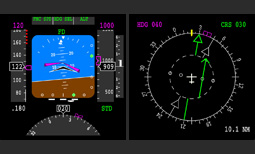 |
| EAS (Equivalent Airspeed) | Equivalent airspeed is the calibrated airspeed corrected for compressibility effects at higher altitudes. It provides a more accurate representation of aerodynamic performance than indicated airspeed. EAS is especially important for high-speed aircraft, as it accounts for variations in air density that affect flight characteristics at different altitudes. | 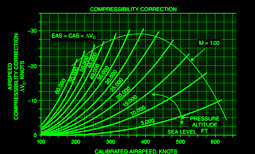 |
| Echelon Formation | A flight formation in which aircraft fly diagonally to one side of a lead aircraft. This configuration is used in military operations and airshows to maintain visibility, control spacing, and facilitate tactical maneuvers. The echelon formation improves situational awareness while allowing rapid response to changes in flight conditions. | 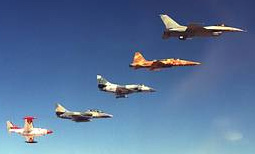 |
| ECU (Engine Control Unit) | The ECU is a computerized system that manages an aircraft engine’s performance, adjusting fuel flow, ignition timing, and other critical parameters. It enhances fuel efficiency, reliability, and engine longevity by continuously monitoring and optimizing operations based on flight conditions, pilot inputs, and system feedback. |  |
| EDTO (Extended Diversion Time Operations) | Formerly known as ETOPS (Extended Twin Operations), EDTO refers to regulatory guidelines for twin-engine aircraft operating long-haul routes over oceanic or remote areas. It dictates how far an aircraft can fly from the nearest suitable airport in case of an engine failure, ensuring safety in extended-range operations. | 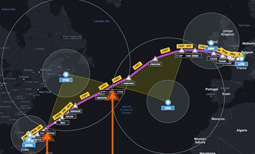 |
| Edwards North Base | Edwards North Base (N34°59'22.15" W117°51'45.29") is a highly restricted section of Edwards Air Force Base, located just north of the main complex. The base is used for classified flight testing, including advanced aircraft and drone programs. Often overshadowed by Area 51, North Base remains central to black project development and high-security aerospace operations deep within the Mojave Desert. | 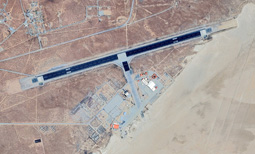 |
| EFIS (Electronic Flight Instrument System) | EFIS is an advanced cockpit display system that replaces traditional analog gauges with digital screens. It integrates flight data such as altitude, speed, heading, and navigation into a user-friendly interface. EFIS improves situational awareness, reduces pilot workload, and enhances safety by providing real-time flight information. | 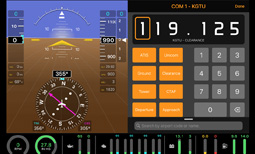 |
| EGPWS (Enhanced Ground Proximity Warning System) | The EGPWS is an advanced safety system designed to prevent controlled flight into terrain (CFIT). It provides visual and auditory alerts if an aircraft is too close to the ground or terrain obstacles. EGPWS uses GPS, altitude, and airspeed data to enhance situational awareness and prevent accidents. | 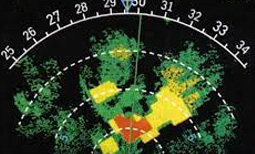 |
| Elevator | The elevator is a movable control surface located on an aircraft’s horizontal stabilizer. It controls pitch movement, allowing the aircraft to climb or descend. By adjusting the elevator’s position, pilots regulate the angle of attack, maintaining stability and controlling altitude changes during flight. | 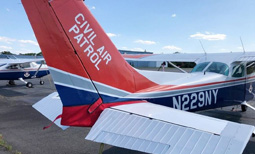 |
| ELT (Emergency Locator Transmitter) | An ELT is a distress beacon that transmits a location signal in the event of an aircraft crash or emergency landing. It operates on international emergency frequencies, enabling search and rescue teams to locate the aircraft quickly. Modern ELTs use GPS technology for precise positioning and faster response times. | 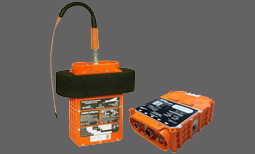 |
| Embankment Effect | A phenomenon where an aircraft experiences altered airflow when flying close to raised terrain, such as hills or embankments. This effect can cause changes in lift and stability, requiring pilots to make adjustments in altitude and power settings to compensate for variations in aerodynamic forces. | 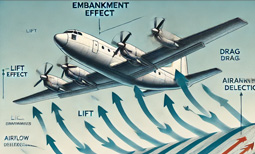 |
| Emergency Descent | An emergency descent is a rapid, controlled descent performed when an aircraft needs to reach a lower altitude quickly. This maneuver is often used during cabin depressurization, smoke, or fire emergencies. Pilots follow standard procedures to minimize risks while ensuring passenger and crew safety. | 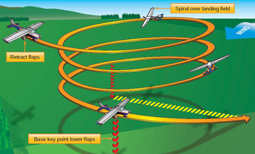 |
| Emergency Evacuation | Emergency evacuation refers to the rapid and orderly exit of passengers and crew from an aircraft in case of an accident, fire, or other hazardous situations. It follows strict safety procedures, utilizing emergency exits, evacuation slides, and crew instructions to ensure a swift and safe evacuation. | 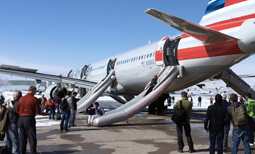 |
| Emergency Exit | A designated door or hatch in an aircraft used for rapid evacuation during emergencies. Emergency exits are equipped with lighting, escape slides, and markings to guide passengers to safety. Regulations require that all emergency exits be easily accessible and operational under all conditions. | 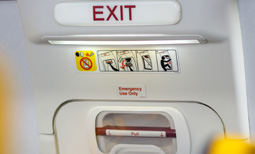 |
| Engine Failure | Engine failure occurs when an aircraft’s engine stops functioning due to mechanical, electrical, or fuel-related issues. Pilots follow specific emergency checklists to attempt a restart or conduct a safe landing. Multi-engine aircraft are designed to continue flying safely on one operational engine when necessary. | 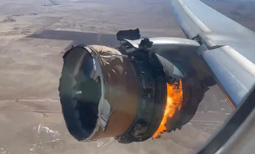 |
| Engine Fire Suppression System | A safety mechanism installed in aircraft engines to detect and extinguish fires. It uses fire detectors, extinguishing agents, and automatic shutoff valves to prevent the spread of flames. Proper maintenance and quick pilot response are essential to ensure the system functions effectively in an emergency. | 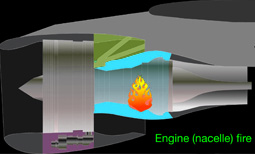 |
| Engine Inlet | The engine inlet is the opening at the front of a jet engine that directs airflow into the compressor. It is designed to optimize airflow efficiency while minimizing turbulence and drag. Proper inlet design improves engine performance, fuel efficiency, and thrust generation. | 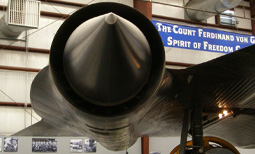 |
| Envelope Protection | Envelope protection is an automated system that prevents an aircraft from exceeding its performance limits, such as stall, over-speed, or excessive pitch. It is integrated into modern fly-by-wire aircraft to enhance safety by providing real-time corrections while allowing pilots full manual control within safe operating parameters. | 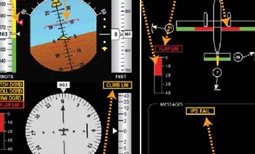 |
| EPIRB (Emergency Position-Indicating Radio Beacon) | An EPIRB is a distress signal device used in aviation and maritime operations. It transmits location information via satellite when activated, aiding in search and rescue missions. Modern EPIRBs include GPS functionality for accurate positioning, improving response times for emergency personnel. |  |
| EPR (Engine Pressure Ratio) | The engine pressure ratio is a measurement of jet engine performance, comparing exhaust gas pressure to intake pressure. It helps pilots and maintenance crews monitor engine efficiency and diagnose potential malfunctions. EPR readings are crucial for optimizing thrust output and fuel consumption. | 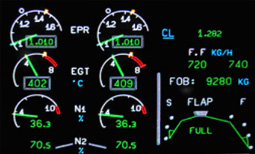 |
| ETC (Engine Thrust Control) | Engine Thrust Control is an automated or manual system that adjusts engine power to maintain optimal performance. Modern aircraft use electronic controls to regulate thrust settings, improving efficiency and ensuring smooth operation under varying flight conditions. | 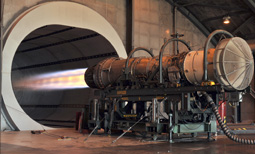 |
| ETD (Estimated Time of Departure) | The estimated time of departure is the scheduled time at which an aircraft is expected to leave the gate or runway. It is influenced by factors such as weather, air traffic control clearances, and operational readiness. Accurate ETD planning enhances efficiency in airline scheduling and passenger management. | 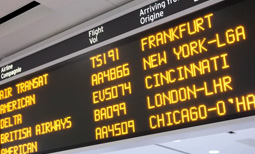 |
| ETOPS (Extended-range Twin-engine Operations) | ETOPS regulations govern how far twin-engine aircraft can fly from the nearest alternate airport in case of an engine failure. It ensures operational safety over long-haul routes, particularly over oceans and remote areas, by requiring specific maintenance, training, and contingency planning. | 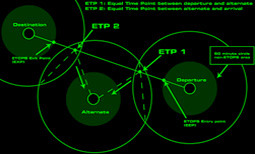 |
| Exhaust Nozzle | The exhaust nozzle is the final component of a jet engine, expelling hot gases to generate thrust. It is designed to optimize airflow, enhance engine efficiency, and sometimes incorporate thrust vectoring for maneuverability. Nozzle shape and size significantly influence engine performance and noise reduction. | 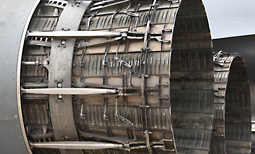 |
| Exceedance | An exceedance occurs when an aircraft surpasses operational limits, such as maximum speed, altitude, or structural load factors. Monitoring exceedances is crucial for safety, as prolonged operation beyond limits can lead to equipment damage, loss of control, or excessive wear on critical components. | 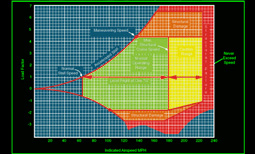 |
| Executive Jet | A high-performance aircraft designed for private or corporate travel, providing luxury, speed, and flexibility. Executive jets are equipped with advanced avionics, comfortable interiors, and long-range capabilities, catering to business executives and VIPs who require efficient air travel. | 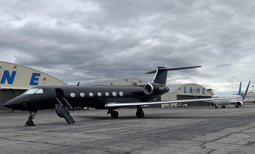 |
| Extended Centerline | An extended imaginary line that continues beyond the physical runway, aiding pilots in approach and departure alignment. It helps in navigation and air traffic control coordination, ensuring aircraft maintain proper course before landing or after takeoff. | 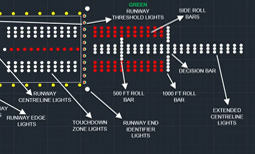 |
| External Load Operations | Aerial operations involving helicopters or specialized aircraft transporting cargo externally, such as firefighting equipment, rescue gear, or construction materials. Proper load balancing and attachment methods are crucial for safety and efficiency. | 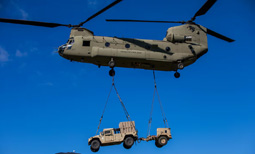 |
| External Fuel Tank | A detachable fuel tank mounted externally on an aircraft to extend its range. Common in military and long-range operations, external fuel tanks provide additional fuel capacity while being jettisonable in emergencies. | 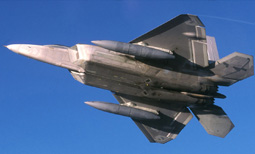 |
