Dependent Parallel Approaches: Difference between revisions
Initial creation of Dependent Parallel Approaches glossary page |
m 1 revision imported |
(No difference)
| |
Revision as of 12:23, 25 March 2025
Dependent Parallel Approaches
Dependent parallel approaches refer to the simultaneous use of two parallel runways for arriving aircraft, with specific separation requirements between aircraft on adjacent approaches. Unlike independent approaches, which permit aircraft to approach each runway without reference to each other, dependent parallel approaches require maintaining longitudinal spacing between aircraft landing on different runways.
The minimum separation between aircraft on adjacent approaches is generally 1.0 nautical mile diagonal spacing, depending on airport design and operational procedures. Controllers monitor both approaches and ensure required separation is maintained throughout the final approach phase.
These procedures are typically used at high-capacity airports with parallel runway configurations, and can significantly enhance arrival rates while preserving safety margins. They are especially useful during peak traffic periods and in complex terminal environments.
Gallery
-
 Parallel Approaches (Source: FAA AIM)
 -
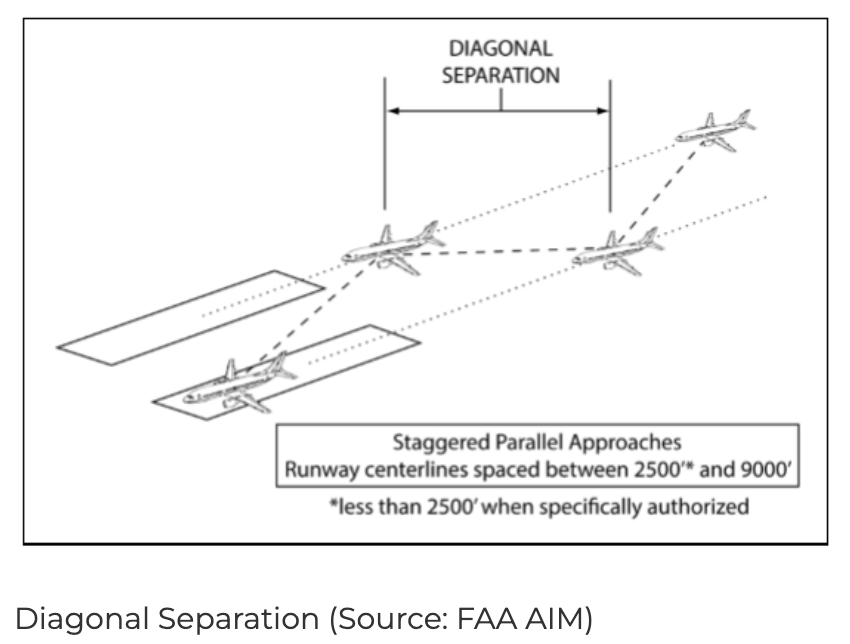 Diagonal Separation (Source: FAA AIM)
 -
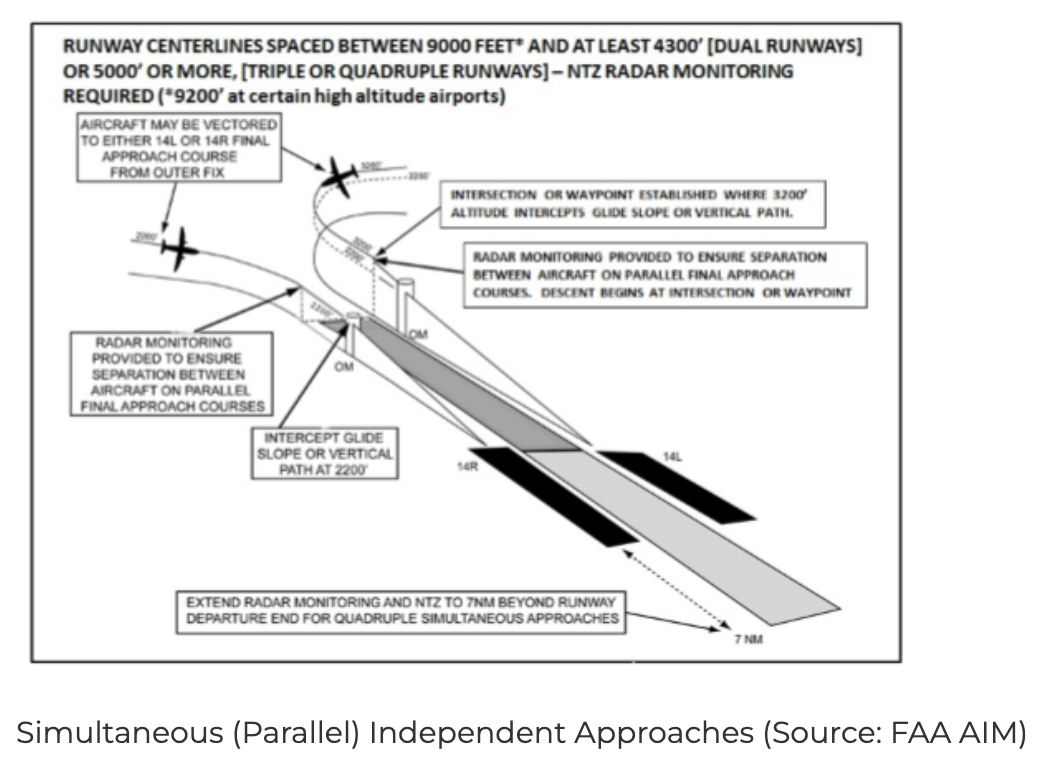 Simultaneous (Parallel) Independent Approaches (Source: FAA AIM)
 -
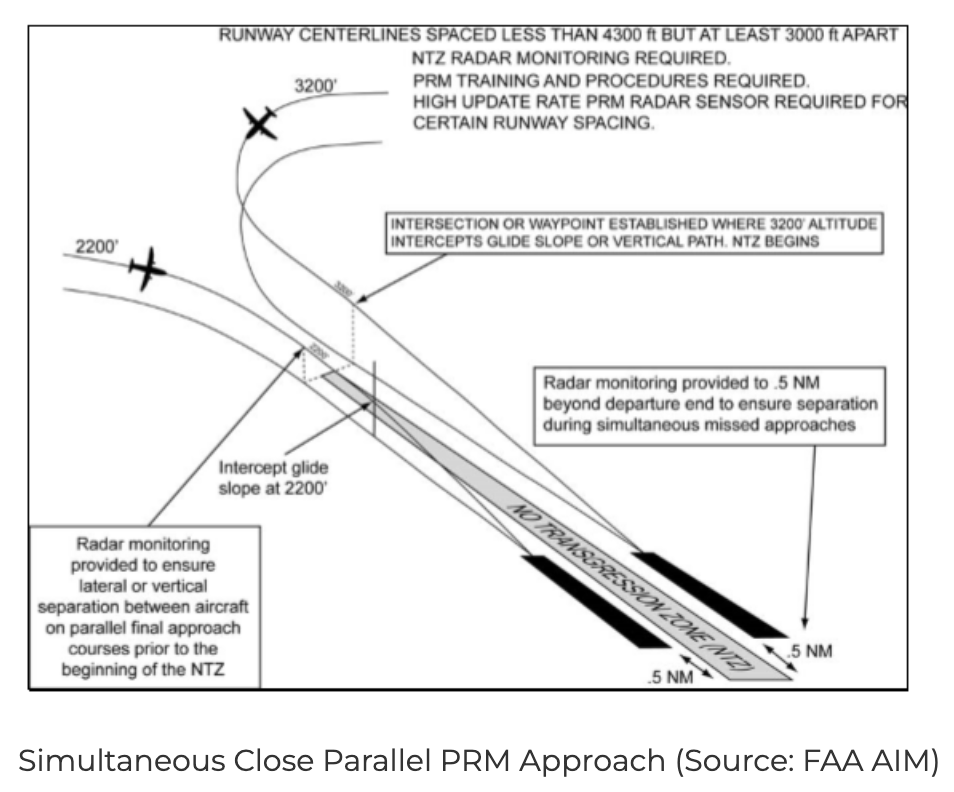 Simultaneous Close Parallel PRM Approach (Source: FAA AIM)


