ASX Glossary - T: Difference between revisions
Jump to navigation
Jump to search
No edit summary |
No edit summary |
||
| Line 148: | Line 148: | ||
</head> | </head> | ||
<body> | <body> | ||
<table> | |||
<tr | <tr> | ||
<td class="term | <td class="term"> | ||
<a href="https://wiki.alsresume.com/index.php?title= | <a href="https://wiki.alsresume.com/index.php?title=Tactical_air_navigation_system" target="_blank" | ||
style="color: #40E0D0; font-weight: bold; text-decoration: none; cursor: pointer;" | style="color: #40E0D0; font-weight: bold; text-decoration: none; cursor: pointer;" | ||
onmouseover="this.style.color='#ff4f01';" | onmouseover="this.style.color='#ff4f01';" | ||
onmouseout="this.style.color='#40E0D0';"> | onmouseout="this.style.color='#40E0D0';">Tactical Air Navigation (TACAN)</a> | ||
</td> | |||
<td class="description">TACAN is a military navigation system providing precise bearing and distance information to aircraft. It operates similarly to VOR/DME systems but offers greater accuracy and reliability. TACAN is widely used on military aircraft and aircraft carriers for en-route navigation and precision approaches.</td> | |||
<td class="image-column"><img src="https://www.alsresume.com/wp-content/uploads/2025/02/TACAN.jpg" alt="Tactical Air Navigation"></td> | |||
<td class="description"> | |||
<td class="image-column"> | |||
</tr> | </tr> | ||
<tr | <tr> | ||
<td class="term"> | <td class="term"> | ||
<a href="https://wiki.alsresume.com/index.php?title= | <a href="https://wiki.alsresume.com/index.php?title=Tactical_Flight_Maneuvers" target="_blank" | ||
style="color: #40E0D0; font-weight: bold; text-decoration: none; cursor: pointer;" | style="color: #40E0D0; font-weight: bold; text-decoration: none; cursor: pointer;" | ||
onmouseover="this.style.color='#ff4f01';" | onmouseover="this.style.color='#ff4f01';" | ||
onmouseout="this.style.color='#40E0D0';"> | onmouseout="this.style.color='#40E0D0';">Tactical Flight Maneuvers</a> | ||
</td> | |||
<td class="description">Tactical flight maneuvers are specialized techniques used in military and emergency operations, including evasive actions, low-level flying, and rapid ascent or descent to avoid threats or obstacles. These maneuvers require advanced pilot training to execute safely.</td> | |||
<td class="image-column"><img src="https://www.alsresume.com/wp-content/uploads/2025/02/Tactical.jpg" alt="Tactical Flight Maneuvers"></td> | |||
<td class="description"> | |||
<td class="image-column"> | |||
</tr> | </tr> | ||
<tr | <tr> | ||
<td class="term"> | |||
<a href="https://wiki.alsresume.com/index.php?title= | <a href="https://wiki.alsresume.com/index.php?title=Twin-boom_aircraft" target="_blank" | ||
style="color: #40E0D0; font-weight: bold; text-decoration: none; cursor: pointer;" | style="color: #40E0D0; font-weight: bold; text-decoration: none; cursor: pointer;" | ||
onmouseover="this.style.color='#ff4f01';" | onmouseover="this.style.color='#ff4f01';" | ||
onmouseout="this.style.color='#40E0D0';"> | onmouseout="this.style.color='#40E0D0';">Tail Boom</a> | ||
</td> | |||
<td class="description">The tail boom is the extended structural component at the rear of some aircraft, particularly helicopters. It supports the tail rotor and stabilizers, ensuring directional control and balance. Its lightweight yet strong construction minimizes weight while maximizing structural integrity.</td> | |||
<td class="image-column"><img src="https://www.alsresume.com/wp-content/uploads/2025/02/Tail-Boom.jpg" alt="Tail Boom"></td> | |||
<td class="description"> | |||
<td class="image-column"> | |||
</tr> | </tr> | ||
<tr | <tr> | ||
<td class="term"> | <td class="term"> | ||
<a href="https://wiki.alsresume.com/index.php?title= | <a href="https://wiki.alsresume.com/index.php?title=Tail_Cone" target="_blank" | ||
style="color: #40E0D0; font-weight: bold; text-decoration: none; cursor: pointer;" | style="color: #40E0D0; font-weight: bold; text-decoration: none; cursor: pointer;" | ||
onmouseover="this.style.color='#ff4f01';" | onmouseover="this.style.color='#ff4f01';" | ||
onmouseout="this.style.color='#40E0D0';"> | onmouseout="this.style.color='#40E0D0';">Tail Cone</a> | ||
</td> | |||
<td class="description">The tail cone is the rear-most section of an aircraft fuselage, often housing auxiliary systems like the auxiliary power unit (APU) or drag-reducing fairings. It helps streamline airflow, reducing aerodynamic drag and improving overall flight efficiency.</td> | |||
<td class="image-column"><img src="https://www.alsresume.com/wp-content/uploads/2025/02/tail-cone.jpg" alt="Tail Cone"></td> | |||
<td class="description"> | |||
<td class="image-column"> | |||
</tr> | </tr> | ||
<tr | <tr> | ||
<td class="term"> | <td class="term"> | ||
<a href="https://wiki.alsresume.com/index.php?title= | <a href="https://wiki.alsresume.com/index.php?title=Tail_Dragger_(Conventional_Landing_Gear)" target="_blank" | ||
style="color: #40E0D0; font-weight: bold; text-decoration: none; cursor: pointer;" | style="color: #40E0D0; font-weight: bold; text-decoration: none; cursor: pointer;" | ||
onmouseover="this.style.color='#ff4f01';" | onmouseover="this.style.color='#ff4f01';" | ||
onmouseout="this.style.color='#40E0D0';"> | onmouseout="this.style.color='#40E0D0';">Tail Dragger (Conventional Landing Gear)</a> | ||
</td> | |||
<td class="description">A tail dragger, or tailwheel aircraft, has two main landing wheels positioned forward and a smaller wheel or skid at the tail. This design was common in early aviation but requires precise handling due to its tendency to ground loop during taxiing.</td> | |||
<td class="image-column"><img src="https://www.alsresume.com/wp-content/uploads/2025/02/Taildragger.jpg" alt="Tail Dragger"></td> | |||
<td class="description"> | |||
<td class="image-column"> | |||
</tr> | </tr> | ||
<tr | <tr> | ||
<td class="term"> | <td class="term"> | ||
<a href="https://wiki.alsresume.com/index.php?title= | <a href="https://wiki.alsresume.com/index.php?title=Horizontal_Stabilizer" target="_blank" | ||
style="color: #40E0D0; font-weight: bold; text-decoration: none; cursor: pointer;" | style="color: #40E0D0; font-weight: bold; text-decoration: none; cursor: pointer;" | ||
onmouseover="this.style.color='#ff4f01';" | onmouseover="this.style.color='#ff4f01';" | ||
onmouseout="this.style.color='#40E0D0';"> | onmouseout="this.style.color='#40E0D0';">Tailplane (Horizontal Stabilizer)</a> | ||
</td> | |||
<td class="description">The tailplane, or horizontal stabilizer, is the fixed or adjustable surface at the aircraft’s tail that helps maintain pitch stability. It balances the aircraft in flight and counters nose-up or nose-down tendencies.</td> | |||
<td class="image-column"><img src="https://www.alsresume.com/wp-content/uploads/2025/02/Tailplane.jpg"></td> | |||
<td class="description"> | |||
<td class="image-column"> | |||
</tr> | </tr> | ||
<tr | <tr> | ||
<td class="term"> | <td class="term"> | ||
<a href="https://wiki.alsresume.com/index.php?title= | <a href="https://wiki.alsresume.com/index.php?title=Takeoff_Distance" target="_blank" | ||
style="color: #40E0D0; font-weight: bold; text-decoration: none; cursor: pointer;" | style="color: #40E0D0; font-weight: bold; text-decoration: none; cursor: pointer;" | ||
onmouseover="this.style.color='#ff4f01';" | onmouseover="this.style.color='#ff4f01';" | ||
onmouseout="this.style.color='#40E0D0';"> | onmouseout="this.style.color='#40E0D0';">Takeoff Distance</a> | ||
</td> | |||
<td class="description">Takeoff distance is the runway length required for an aircraft to accelerate to rotation speed (Vr) and become airborne. Factors like aircraft weight, altitude, wind speed, and runway surface conditions influence the required distance for safe takeoff.</td> | |||
<td class="image-column"><img src="https://www.alsresume.com/wp-content/uploads/2025/02/Maule.jpg" alt="Takeoff Distance"></td> | |||
<td class="description"> | |||
<td class="image-column"> | |||
</tr> | </tr> | ||
<tr> | <tr> | ||
<td class="term"> | <td class="term"> | ||
<a href="https://wiki.alsresume.com/index.php?title= | <a href="https://wiki.alsresume.com/index.php?title=Takeoff_Roll" target="_blank" | ||
style="color: #40E0D0; font-weight: bold; text-decoration: none; cursor: pointer;" | style="color: #40E0D0; font-weight: bold; text-decoration: none; cursor: pointer;" | ||
onmouseover="this.style.color='#ff4f01';" | onmouseover="this.style.color='#ff4f01';" | ||
onmouseout="this.style.color='#40E0D0';"> | onmouseout="this.style.color='#40E0D0';">Takeoff Roll</a> | ||
</td> | |||
<td class="description">The takeoff roll is the phase of takeoff where the aircraft accelerates along the runway before becoming airborne. It begins when power is applied and ends at liftoff. Proper alignment, thrust control, and rudder use are essential during this phase.</td> | |||
<td class="description"> | <td class="image-column"><img src="https://www.alsresume.com/wp-content/uploads/2025/02/Helio2.jpg" alt="Takeoff Roll"></td> | ||
<td class="image-column"><img src="https://www.alsresume.com/wp-content/uploads/2025/02/ | |||
</tr> | </tr> | ||
<tr | <tr> | ||
<td class="term"> | <td class="term"> | ||
<a href="https://wiki.alsresume.com/index.php?title= | <a href="https://wiki.alsresume.com/index.php?title=Primary_radar" target="_blank" | ||
style="color: #40E0D0; font-weight: bold; text-decoration: none; cursor: pointer;" | style="color: #40E0D0; font-weight: bold; text-decoration: none; cursor: pointer;" | ||
onmouseover="this.style.color='#ff4f01';" | onmouseover="this.style.color='#ff4f01';" | ||
onmouseout="this.style.color='#40E0D0';"> | onmouseout="this.style.color='#40E0D0';">Target Resolution (ATC)</a> | ||
</td> | |||
<td class="description">Target resolution is the minimum separation standard between aircraft on radar screens. Air traffic controllers ensure that aircraft remain sufficiently spaced to prevent conflicts while maintaining efficient traffic flow in controlled airspace.</td> | |||
<td class="image-column"><img src="https://www.alsresume.com/wp-content/uploads/2025/03/Target-Resolution.jpg" alt="Target Resolution"></td> | |||
<td class="description"> | |||
<td class="image-column"> | |||
</tr> | </tr> | ||
<tr | <tr> | ||
<td class="term"> | <td class="term"> | ||
<a href="https://wiki.alsresume.com/index.php?title= | <a href="https://wiki.alsresume.com/index.php?title=Runway_Centerline_Lights" target="_blank" | ||
style="color: #40E0D0; font-weight: bold; text-decoration: none; cursor: pointer;" | style="color: #40E0D0; font-weight: bold; text-decoration: none; cursor: pointer;" | ||
onmouseover="this.style.color='#ff4f01';" | onmouseover="this.style.color='#ff4f01';" | ||
onmouseout="this.style.color='#40E0D0';"> | onmouseout="this.style.color='#40E0D0';">Taxiway Centerline Lighting</a> | ||
</td> | |||
<td class="description">Taxiway centerline lighting consists of green lights embedded along taxiway centerlines to guide pilots during low-visibility conditions. These lights help maintain alignment while taxiing to and from runways.</td> | |||
<td class="image-column"><img src="https://www.alsresume.com/wp-content/uploads/2025/03/Taxiway-Centerline-Lighting.jpg" alt="Taxiway Centerline Lighting"></td> | |||
<td class="description"> | |||
<td class="image-column"> | |||
</tr> | </tr> | ||
<tr | <tr> | ||
<td class="term"> | <td class="term"> | ||
<a href="https://wiki.alsresume.com/index.php?title= | <a href="https://wiki.alsresume.com/index.php?title=Taxiway" target="_blank" | ||
style="color: #40E0D0; font-weight: bold; text-decoration: none; cursor: pointer;" | style="color: #40E0D0; font-weight: bold; text-decoration: none; cursor: pointer;" | ||
onmouseover="this.style.color='#ff4f01';" | onmouseover="this.style.color='#ff4f01';" | ||
onmouseout="this.style.color='#40E0D0';"> | onmouseout="this.style.color='#40E0D0';">Taxiway Designators</a> | ||
</td> | |||
<td class="description">Taxiway designators are alphanumeric labels assigned to taxiways to facilitate ground navigation at airports. They are displayed on signs and charts to help pilots follow ATC instructions.</td> | |||
<td class="image-column"><img src="https://www.alsresume.com/wp-content/uploads/2025/03/Taxiway-Designators.jpg" alt="Taxiway Designators"></td> | |||
<td class="description"> | |||
<td class="image-column"> | |||
</tr> | </tr> | ||
<tr | <tr> | ||
<td class="term"> | <td class="term"> | ||
<a href="https://wiki.alsresume.com/index.php?title= | <a href="https://wiki.alsresume.com/index.php?title=Inversion_(meteorology)" target="_blank" | ||
style="color: #40E0D0; font-weight: bold; text-decoration: none; cursor: pointer;" | style="color: #40E0D0; font-weight: bold; text-decoration: none; cursor: pointer;" | ||
onmouseover="this.style.color='#ff4f01';" | onmouseover="this.style.color='#ff4f01';" | ||
onmouseout="this.style.color='#40E0D0';"> | onmouseout="this.style.color='#40E0D0';">Temperature Inversion</a> | ||
</td> | |||
<td class="description">A temperature inversion occurs when warm air overlays cooler air at lower altitudes, disrupting normal atmospheric behavior. This can cause reduced climb performance, increased turbulence, and visibility issues, particularly when trapping pollutants or fog near the surface.</td> | |||
<td class="image-column"><img src="https://www.alsresume.com/wp-content/uploads/2025/03/Temp-Inversion.jpg" alt="Temperature Inversion"></td> | |||
<td class="description"> | |||
<td class="image-column"> | |||
</tr> | </tr> | ||
<tr | <tr> | ||
<td class="term"> | <td class="term"> | ||
<a href="https:// | <a href="https://wiki.alsresume.com/index.php?title=Terrain_awareness_and_warning_system" target="_blank" | ||
style="color: #40E0D0; font-weight: bold; text-decoration: none; cursor: pointer;" | style="color: #40E0D0; font-weight: bold; text-decoration: none; cursor: pointer;" | ||
onmouseover="this.style.color='#ff4f01';" | onmouseover="this.style.color='#ff4f01';" | ||
onmouseout="this.style.color='#40E0D0';"> | onmouseout="this.style.color='#40E0D0';">Terrain Awareness and Warning System (TAWS)</a> | ||
</td> | |||
<td class="description">TAWS is an onboard safety system designed to prevent controlled flight into terrain (CFIT) by providing real-time warnings based on terrain proximity and altitude. It enhances situational awareness, particularly in poor visibility or mountainous regions.</td> | |||
<td class="image-column"><img src="https://www.alsresume.com/wp-content/uploads/2025/03/TA.jpg" alt="Terrain Awareness and Warning System (TAWS)"></td> | |||
<td class="description"> | |||
<td class="image-column"> | |||
</tr> | </tr> | ||
<tr | <tr> | ||
<td class="term"> | <td class="term"> | ||
<a href="https://wiki.alsresume.com/index.php?title= | <a href="https://wiki.alsresume.com/index.php?title=Terminal_Area_Forecast_(TAF)" target="_blank" | ||
style="color: #40E0D0; font-weight: bold; text-decoration: none; cursor: pointer;" | style="color: #40E0D0; font-weight: bold; text-decoration: none; cursor: pointer;" | ||
onmouseover="this.style.color='#ff4f01';" | onmouseover="this.style.color='#ff4f01';" | ||
onmouseout="this.style.color='#40E0D0';"> | onmouseout="this.style.color='#40E0D0';">Terminal Area Forecast (TAF)</a> | ||
</td> | |||
<td class="description">A TAF is a detailed meteorological forecast for airport locations, providing pilots with expected weather conditions, including wind, visibility, cloud cover, and precipitation over a specified period. It helps with pre-flight planning and decision-making.</td> | |||
<td class="image-column"><img src="https://www.alsresume.com/wp-content/uploads/2025/03/TAF.jpg" alt="Terminal Area Forecast (TAF)"></td> | |||
<td class="description"> | |||
<td class="image-column"> | |||
</tr> | </tr> | ||
<tr | <tr> | ||
<td class="term"> | <td class="term"> | ||
<a href="https://wiki.alsresume.com/index.php?title= | <a href="https://wiki.alsresume.com/index.php?title=Airport_surveillance_radar" target="_blank" | ||
style="color: #40E0D0; font-weight: bold; text-decoration: none; cursor: pointer;" | style="color: #40E0D0; font-weight: bold; text-decoration: none; cursor: pointer;" | ||
onmouseover="this.style.color='#ff4f01';" | onmouseover="this.style.color='#ff4f01';" | ||
onmouseout="this.style.color='#40E0D0';"> | onmouseout="this.style.color='#40E0D0';">Terminal Radar Approach Control (TRACON)</a> | ||
</td> | |||
<td class="description">TRACON facilities manage aircraft arriving and departing from busy airports, handling transitions between en-route airspace and final approach. Controllers provide sequencing, separation, and clearance instructions to ensure smooth and safe operations.</td> | |||
<td class="image-column"><img src="https://www.alsresume.com/wp-content/uploads/2025/03/TRACON.jpg" alt="Terminal Radar Approach Control (TRACON)"></td> | |||
<td class="description"> | |||
<td class="image-column"> | |||
</tr> | </tr> | ||
<tr | <tr> | ||
<td class="term"> | <td class="term"> | ||
<a href="https://wiki.alsresume.com/index.php?title= | <a href="https://wiki.alsresume.com/index.php?title=Thrust-to-weight_ratio" target="_blank" | ||
style="color: #40E0D0; font-weight: bold; text-decoration: none; cursor: pointer;" | style="color: #40E0D0; font-weight: bold; text-decoration: none; cursor: pointer;" | ||
onmouseover="this.style.color='#ff4f01';" | onmouseover="this.style.color='#ff4f01';" | ||
onmouseout="this.style.color='#40E0D0';"> | onmouseout="this.style.color='#40E0D0';">Thrust-to-Weight Ratio (TWR)</a> | ||
</td> | |||
<td class="description">The thrust-to-weight ratio is a performance metric comparing an aircraft’s engine thrust to its total weight. Higher ratios indicate better acceleration and climb capability, making this measurement crucial in fighter jets and high-performance aircraft.</td> | |||
<td class="image-column"><img src="https://www.alsresume.com/wp-content/uploads/2025/03/Thrust-to-Weight.jpg" alt="Thrust-to-Weight Ratio (TWR)"></td> | |||
<td class="description"> | |||
<td class="image-column"> | |||
</tr> | </tr> | ||
<tr | <tr> | ||
<td class="term"> | <td class="term"> | ||
<a href="https://wiki.alsresume.com/index.php?title= | <a href="https://wiki.alsresume.com/index.php?title=Thrust_vectoring" target="_blank" | ||
style="color: #40E0D0; font-weight: bold; text-decoration: none; cursor: pointer;" | style="color: #40E0D0; font-weight: bold; text-decoration: none; cursor: pointer;" | ||
onmouseover="this.style.color='#ff4f01';" | onmouseover="this.style.color='#ff4f01';" | ||
onmouseout="this.style.color='#40E0D0';"> | onmouseout="this.style.color='#40E0D0';">Thrust Vectoring</a> | ||
</td> | |||
<td class="description">Thrust vectoring allows pilots to manipulate an aircraft’s thrust direction, improving maneuverability. Used in advanced fighter jets and vertical takeoff aircraft, it enhances agility by enabling sharper turns, hover capabilities, and controlled descents.</td> | |||
<td class="image-column"><img src="https://www.alsresume.com/wp-content/uploads/2025/03/Thrust-Vectoring.jpg" alt="Thrust Vectoring"></td> | |||
<td class="description"> | |||
<td class="image-column"> | |||
</tr> | </tr> | ||
<tr | <tr> | ||
<td class="term"> | <td class="term"> | ||
<a href="https://wiki.alsresume.com/index.php?title= | <a href="https://wiki.alsresume.com/index.php?title=Thunderstorm_Avoidance_Procedures" target="_blank" | ||
style="color: #40E0D0; font-weight: bold; text-decoration: none; cursor: pointer;" | style="color: #40E0D0; font-weight: bold; text-decoration: none; cursor: pointer;" | ||
onmouseover="this.style.color='#ff4f01';" | onmouseover="this.style.color='#ff4f01';" | ||
onmouseout="this.style.color='#40E0D0';"> | onmouseout="this.style.color='#40E0D0';">Thunderstorm Avoidance Procedures</a> | ||
</td> | |||
<td class="description">Thunderstorm avoidance involves using radar, weather reports, and ATC advisories to navigate around convective weather systems. Pilots follow minimum distance guidelines to prevent severe turbulence, lightning strikes, and hail damage.</td> | |||
<td class="image-column"><img src="https://www.alsresume.com/wp-content/uploads/2025/03/Thunderstorm-Avoidance-Procedure.jpg" alt="Thunderstorm Avoidance Procedures"></td> | |||
<td class="description"> | |||
<td class="image-column"> | |||
</tr> | </tr> | ||
<tr | <tr> | ||
<td class="term"> | <td class="term"> | ||
<a href="https://wiki.alsresume.com/index.php?title= | <a href="https://wiki.alsresume.com/index.php?title=Time_of_Arrival_Control_(TOAC)" target="_blank" | ||
style="color: #40E0D0; font-weight: bold; text-decoration: none; cursor: pointer;" | style="color: #40E0D0; font-weight: bold; text-decoration: none; cursor: pointer;" | ||
onmouseover="this.style.color='#ff4f01';" | onmouseover="this.style.color='#ff4f01';" | ||
onmouseout="this.style.color='#40E0D0';"> | onmouseout="this.style.color='#40E0D0';">Time of Arrival Control (TOAC)</a> | ||
</td> | |||
<td class="description">TOAC is an air traffic management technique used to optimize arrival spacing. It ensures aircraft arrive at specific points at precise times, reducing delays and improving airspace efficiency.</td> | |||
<td class="image-column"><img src="https://www.alsresume.com/wp-content/uploads/2025/03/TOAC.jpg" alt="Time of Arrival Control (TOAC)"></td> | |||
<td class="description"> | |||
<td class="image-column"> | |||
</tr> | </tr> | ||
<tr | <tr> | ||
<td class="term"> | <td class="term"> | ||
<a href="https://wiki.alsresume.com/index.php?title= | <a href="https://wiki.alsresume.com/index.php?title=Tire_Pressure_Monitoring_System_(TPMS)" target="_blank" | ||
style="color: # | style="color: #40E0D0; font-weight: bold; text-decoration: none; cursor: pointer;" | ||
onmouseover="this.style.color='#ff4f01';" | onmouseover="this.style.color='#ff4f01';" | ||
onmouseout="this.style.color='# | onmouseout="this.style.color='#40E0D0';">Tire Pressure Monitoring System (TPMS)</a> | ||
</td> | |||
<td class="description">TPMS in aircraft tracks the inflation status of landing gear tires. Proper tire pressure is crucial for safe takeoff, landing, and taxiing, preventing blowouts or excessive wear.</td> | |||
<td class="image-column"><img src="https://www.alsresume.com/wp-content/uploads/2025/03/Tire-Pressure-Control.jpg" alt="Tire Pressure Monitoring System"></td> | |||
<td class="description"> | |||
<td class="image-column"> | |||
</tr> | </tr> | ||
<tr id=" | <tr id="tonopah-ttr"> | ||
<td class="term"> | |||
<a href="https://wiki.alsresume.com/index.php?title=Tonopah_Test_Range" target="_blank" | |||
style="color: #40E0D0; font-weight: bold; text-decoration: none; cursor: pointer;" | |||
onmouseover="this.style.color='#ff4f01';" | |||
onmouseout="this.style.color='#40E0D0';">Tonopah Test Range (TTR)</a> | |||
</td> | |||
<td class="description"><span style="color: #00ff01; font-weight: bold; text-decoration: none; cursor: pointer;" | |||
onmouseover="this.style.color='#ff4f01';" | |||
<td class="description"> | onmouseout="this.style.color='#00ff01';" | ||
onclick="window.open('https://www.google.com/maps/@37.8032,-116.7813,15z/data=!3m1!1e3', '_blank')"> | |||
Tonopah Test Range (TTR) | |||
</span> is a restricted military site in Nevada used for weapons testing and secret aviation programs. Managed by Sandia National Laboratories and the U.S. Air Force, it's known for stealth aircraft development, including the F-117 Nighthawk. Established during the Cold War, TTR remains active today, supporting classified defense projects and advanced military technologies. | |||
</td> | |||
<td class="image-column"> | |||
<img src="https://www.alsresume.com/wp-content/uploads/2025/03/Tonopah.jpg" alt="Tonopah TTR"> | |||
</td> | |||
</tr> | </tr> | ||
<tr | <tr> | ||
<td class="term"> | <td class="term"> | ||
<a href="https://wiki.alsresume.com/index.php?title= | <a href="https://wiki.alsresume.com/index.php?title=Torque_Effect_(Helicopters)" target="_blank" | ||
style="color: #40E0D0; font-weight: bold; text-decoration: none; cursor: pointer;" | style="color: #40E0D0; font-weight: bold; text-decoration: none; cursor: pointer;" | ||
onmouseover="this.style.color='#ff4f01';" | onmouseover="this.style.color='#ff4f01';" | ||
onmouseout="this.style.color='#40E0D0';"> | onmouseout="this.style.color='#40E0D0';">Torque Effect (Helicopters)</a> | ||
</td> | |||
<td class="description">Torque effect is a fundamental helicopter principle where the main rotor’s rotation generates an opposite force, causing the fuselage to spin. The tail rotor counteracts this effect, ensuring directional stability.</td> | |||
<td class="image-column"><img src="https://www.alsresume.com/wp-content/uploads/2025/03/Torque-Helicopter.jpg" alt="Torque Effect"></td> | |||
<td class="description"> | |||
<td class="image-column"> | |||
</tr> | </tr> | ||
<tr | <tr> | ||
<td class="term"> | <td class="term"> | ||
<a href="https://wiki.alsresume.com/index.php?title= | <a href="https://wiki.alsresume.com/index.php?title=Traffic_collision_avoidance_system" target="_blank" | ||
style="color: #40E0D0; font-weight: bold; text-decoration: none; cursor: pointer;" | style="color: #40E0D0; font-weight: bold; text-decoration: none; cursor: pointer;" | ||
onmouseover="this.style.color='#ff4f01';" | onmouseover="this.style.color='#ff4f01';" | ||
onmouseout="this.style.color='#40E0D0';"> | onmouseout="this.style.color='#40E0D0';">Traffic Collision Avoidance System (TCAS)</a> | ||
</td> | |||
<td class="description">TCAS is an onboard system that monitors nearby aircraft and provides collision avoidance advisories. It detects potential conflicts and instructs pilots to take corrective action to prevent midair collisions.</td> | |||
<td class="image-column"><img src="https://www.alsresume.com/wp-content/uploads/2025/03/TCAS.jpg" alt="Traffic Collision Avoidance System"></td> | |||
<td class="description"> | |||
<td class="image-column"> | |||
</tr> | </tr> | ||
<tr> | |||
<td class="term"> | <td class="term"> | ||
<a href="https://wiki.alsresume.com/index.php?title= | <a href="https://wiki.alsresume.com/index.php?title=Trailing_Edge_Flaps" target="_blank" | ||
style="color: #40E0D0; font-weight: bold; text-decoration: none; cursor: pointer;" | style="color: #40E0D0; font-weight: bold; text-decoration: none; cursor: pointer;" | ||
onmouseover="this.style.color='#ff4f01';" | onmouseover="this.style.color='#ff4f01';" | ||
onmouseout="this.style.color='#40E0D0';"> | onmouseout="this.style.color='#40E0D0';">Trailing Edge Flaps</a> | ||
</td> | |||
<td class="description">Trailing edge flaps are movable panels located on the wing’s rear edge, deployed to increase lift during takeoff and landing. They allow aircraft to fly at lower speeds without stalling.</td> | |||
<td class="image-column"><img src="https://www.alsresume.com/wp-content/uploads/2025/03/Trailing-Edge-Flaps.jpg" alt="Trailing Edge Flaps"></td> | |||
<td class="description"> | |||
<td class="image-column"> | |||
</tr> | </tr> | ||
<tr | <tr> | ||
<td class="term"> | <td class="term"> | ||
<a href="https://wiki.alsresume.com/index.php?title= | <a href="https://wiki.alsresume.com/index.php?title=North_Atlantic_Tracks" target="_blank" | ||
style="color: #40E0D0; font-weight: bold; text-decoration: none; cursor: pointer;" | style="color: #40E0D0; font-weight: bold; text-decoration: none; cursor: pointer;" | ||
onmouseover="this.style.color='#ff4f01';" | onmouseover="this.style.color='#ff4f01';" | ||
onmouseout="this.style.color='#40E0D0';"> | onmouseout="this.style.color='#40E0D0';">Transatlantic Flight Corridor</a> | ||
</td> | |||
<td class="description">The transatlantic flight corridor consists of designated airways used for flights between North America and Europe. These routes are managed through organized tracks that change daily based on wind patterns and air traffic demand.</td> | |||
<td class="image-column"><img src="https://www.alsresume.com/wp-content/uploads/2025/03/TransAtlantic.jpg" alt="Transatlantic Flight Corridor"></td> | |||
<td class="description"> | |||
<td class="image-column"> | |||
</tr> | </tr> | ||
<tr | <tr> | ||
<td class="term"> | <td class="term"> | ||
<a href="https://wiki.alsresume.com/index.php?title= | <a href="https://wiki.alsresume.com/index.php?title=Transonic" target="_blank" | ||
style="color: #40E0D0; font-weight: bold; text-decoration: none; cursor: pointer;" | style="color: #40E0D0; font-weight: bold; text-decoration: none; cursor: pointer;" | ||
onmouseover="this.style.color='#ff4f01';" | onmouseover="this.style.color='#ff4f01';" | ||
onmouseout="this.style.color='#40E0D0';"> | onmouseout="this.style.color='#40E0D0';">Transonic Flight</a> | ||
</td> | |||
<td class="description">Transonic flight occurs at speeds close to Mach 1, where airflow over parts of the aircraft becomes supersonic while other areas remain subsonic. This creates aerodynamic challenges, including shock waves and increased drag.</td> | |||
<td class="image-column"><img src="https://www.alsresume.com/wp-content/uploads/2025/03/Transonic.jpg" alt="Transonic Flight"></td> | |||
<td class="description"> | |||
<td class="image-column"> | |||
</tr> | </tr> | ||
<tr | <tr> | ||
<td class="term"> | <td class="term"> | ||
<a href="https://wiki.alsresume.com/index.php?title= | <a href="https://wiki.alsresume.com/index.php?title=Compressor_stall" target="_blank" | ||
style="color: #40E0D0; font-weight: bold; text-decoration: none; cursor: pointer;" | style="color: #40E0D0; font-weight: bold; text-decoration: none; cursor: pointer;" | ||
onmouseover="this.style.color='#ff4f01';" | onmouseover="this.style.color='#ff4f01';" | ||
onmouseout="this.style.color='#40E0D0';"> | onmouseout="this.style.color='#40E0D0';">Turbine Engine Stall</a> | ||
</td> | |||
<td class="description">A turbine engine stall occurs when airflow is disrupted within a jet engine, leading to power loss or flameout. Causes include rapid throttle movements, compressor malfunctions, or bird ingestion.</td> | |||
<td class="image-column"><img src="https://www.alsresume.com/wp-content/uploads/2025/03/Turbine-stall.jpg" alt="Turbine Engine Stall"></td> | |||
<td class="description"> | |||
<td class="image-column"> | |||
</tr> | </tr> | ||
<tr | <tr> | ||
<td class="term"> | <td class="term"> | ||
<a href="https://wiki.alsresume.com/index.php?title= | <a href="https://wiki.alsresume.com/index.php?title=Turbofan" target="_blank" | ||
style="color: #40E0D0; font-weight: bold; text-decoration: none; cursor: pointer;" | style="color: #40E0D0; font-weight: bold; text-decoration: none; cursor: pointer;" | ||
onmouseover="this.style.color='#ff4f01';" | onmouseover="this.style.color='#ff4f01';" | ||
onmouseout="this.style.color='#40E0D0';"> | onmouseout="this.style.color='#40E0D0';">Turbofan Engine</a> | ||
</td> | |||
<td class="description">A turbofan engine is a jet propulsion system that combines a turbine engine with a fan, improving efficiency and reducing noise. It is the most common engine type in modern commercial aircraft.</td> | |||
<td class="image-column"><img src="https://www.alsresume.com/wp-content/uploads/2025/03/Turbofan.jpg" alt="Turbofan Engine"></td> | |||
<td class="description"> | |||
<td class="image-column"> | |||
</tr> | </tr> | ||
<tr | <tr> | ||
<td class="term"> | <td class="term"> | ||
<a href="https://wiki.alsresume.com/index.php?title= | <a href="https://wiki.alsresume.com/index.php?title=Turboprop" target="_blank" | ||
style="color: #40E0D0; font-weight: bold; text-decoration: none; cursor: pointer;" | style="color: #40E0D0; font-weight: bold; text-decoration: none; cursor: pointer;" | ||
onmouseover="this.style.color='#ff4f01';" | onmouseover="this.style.color='#ff4f01';" | ||
onmouseout="this.style.color='#40E0D0';"> | onmouseout="this.style.color='#40E0D0';">Turboprop Engine</a> | ||
</td> | |||
<td class="description">A turboprop engine uses a turbine to drive a propeller, offering fuel efficiency at lower speeds. Common in regional and cargo aircraft, turboprops are ideal for short-haul flights and rough-field operations.</td> | |||
<td class="image-column"><img src="https://www.alsresume.com/wp-content/uploads/2025/03/Turboprop.jpg" alt="Turboprop Engine"></td> | |||
<td class="description"> | |||
<td class="image-column"> | |||
</tr> | </tr> | ||
<tr | <tr> | ||
<td class="term"> | <td class="term"> | ||
<a href="https://wiki.alsresume.com/index.php?title= | <a href="https://wiki.alsresume.com/index.php?title=Turbulence_Intensity_Scale" target="_blank" | ||
style="color: #40E0D0; font-weight: bold; text-decoration: none; cursor: pointer;" | style="color: #40E0D0; font-weight: bold; text-decoration: none; cursor: pointer;" | ||
onmouseover="this.style.color='#ff4f01';" | onmouseover="this.style.color='#ff4f01';" | ||
onmouseout="this.style.color='#40E0D0';"> | onmouseout="this.style.color='#40E0D0';">Turbulence Intensity Scale</a> | ||
</td> | |||
<td class="description">The turbulence intensity scale categorizes turbulence into light, moderate, severe, and extreme levels. Pilots and meteorologists use this scale to assess and report in-flight conditions, helping other aircraft avoid hazardous air.</td> | |||
<td class="image-column"><img src="https://www.alsresume.com/wp-content/uploads/2025/03/Turbulence-intensity-scale.jpg" alt="Turbulence Intensity Scale"></td> | |||
<td class="description"> | |||
<td class="image-column"> | |||
</tr> | </tr> | ||
<tr | <tr> | ||
<td class="term"> | <td class="term"> | ||
<a href="https://wiki.alsresume.com/index.php?title= | <a href="https://wiki.alsresume.com/index.php?title=Turn_Radius_(Aircraft_Maneuverability)" target="_blank" | ||
style="color: #40E0D0; font-weight: bold; text-decoration: none; cursor: pointer;" | style="color: #40E0D0; font-weight: bold; text-decoration: none; cursor: pointer;" | ||
onmouseover="this.style.color='#ff4f01';" | onmouseover="this.style.color='#ff4f01';" | ||
onmouseout="this.style.color='#40E0D0';"> | onmouseout="this.style.color='#40E0D0';">Turn Radius (Aircraft Maneuverability)</a> | ||
</td> | |||
<td class="description">Turn radius refers to the horizontal distance an aircraft requires to complete a turn at a given speed and bank angle. Smaller turn radii indicate greater maneuverability, essential for military dogfighting and aerobatic flying.</td> | |||
<td class="image-column"><img src="https://www.alsresume.com/wp-content/uploads/2025/03/Turn-radius.jpg" alt="Turn Radius"></td> | |||
<td class="description"> | |||
<td class="image-column"> | |||
</tr> | </tr> | ||
</table> | |||
</body> | </body> | ||
</html> | </html> | ||
Latest revision as of 19:36, 23 April 2025

| Click on term for full definition | Click here to report corrections and content addition requests |
| Tactical Air Navigation (TACAN) | TACAN is a military navigation system providing precise bearing and distance information to aircraft. It operates similarly to VOR/DME systems but offers greater accuracy and reliability. TACAN is widely used on military aircraft and aircraft carriers for en-route navigation and precision approaches. | 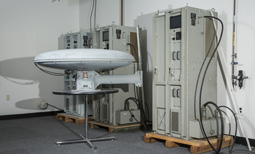 |
| Tactical Flight Maneuvers | Tactical flight maneuvers are specialized techniques used in military and emergency operations, including evasive actions, low-level flying, and rapid ascent or descent to avoid threats or obstacles. These maneuvers require advanced pilot training to execute safely. |  |
| Tail Boom | The tail boom is the extended structural component at the rear of some aircraft, particularly helicopters. It supports the tail rotor and stabilizers, ensuring directional control and balance. Its lightweight yet strong construction minimizes weight while maximizing structural integrity. | 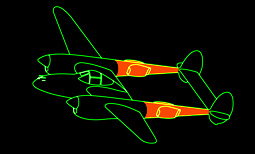 |
| Tail Cone | The tail cone is the rear-most section of an aircraft fuselage, often housing auxiliary systems like the auxiliary power unit (APU) or drag-reducing fairings. It helps streamline airflow, reducing aerodynamic drag and improving overall flight efficiency. | 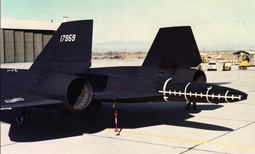 |
| Tail Dragger (Conventional Landing Gear) | A tail dragger, or tailwheel aircraft, has two main landing wheels positioned forward and a smaller wheel or skid at the tail. This design was common in early aviation but requires precise handling due to its tendency to ground loop during taxiing. | 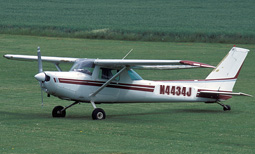 |
| Tailplane (Horizontal Stabilizer) | The tailplane, or horizontal stabilizer, is the fixed or adjustable surface at the aircraft’s tail that helps maintain pitch stability. It balances the aircraft in flight and counters nose-up or nose-down tendencies. | 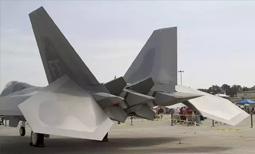 |
| Takeoff Distance | Takeoff distance is the runway length required for an aircraft to accelerate to rotation speed (Vr) and become airborne. Factors like aircraft weight, altitude, wind speed, and runway surface conditions influence the required distance for safe takeoff. | 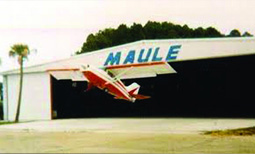 |
| Takeoff Roll | The takeoff roll is the phase of takeoff where the aircraft accelerates along the runway before becoming airborne. It begins when power is applied and ends at liftoff. Proper alignment, thrust control, and rudder use are essential during this phase. |  |
| Target Resolution (ATC) | Target resolution is the minimum separation standard between aircraft on radar screens. Air traffic controllers ensure that aircraft remain sufficiently spaced to prevent conflicts while maintaining efficient traffic flow in controlled airspace. |  |
| Taxiway Centerline Lighting | Taxiway centerline lighting consists of green lights embedded along taxiway centerlines to guide pilots during low-visibility conditions. These lights help maintain alignment while taxiing to and from runways. | 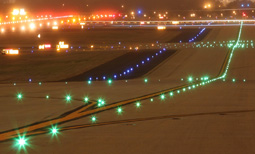 |
| Taxiway Designators | Taxiway designators are alphanumeric labels assigned to taxiways to facilitate ground navigation at airports. They are displayed on signs and charts to help pilots follow ATC instructions. | 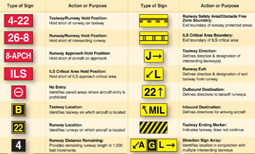 |
| Temperature Inversion | A temperature inversion occurs when warm air overlays cooler air at lower altitudes, disrupting normal atmospheric behavior. This can cause reduced climb performance, increased turbulence, and visibility issues, particularly when trapping pollutants or fog near the surface. | 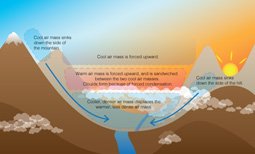 |
| Terrain Awareness and Warning System (TAWS) | TAWS is an onboard safety system designed to prevent controlled flight into terrain (CFIT) by providing real-time warnings based on terrain proximity and altitude. It enhances situational awareness, particularly in poor visibility or mountainous regions. | 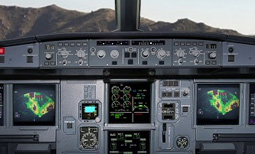 |
| Terminal Area Forecast (TAF) | A TAF is a detailed meteorological forecast for airport locations, providing pilots with expected weather conditions, including wind, visibility, cloud cover, and precipitation over a specified period. It helps with pre-flight planning and decision-making. | 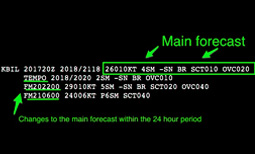 |
| Terminal Radar Approach Control (TRACON) | TRACON facilities manage aircraft arriving and departing from busy airports, handling transitions between en-route airspace and final approach. Controllers provide sequencing, separation, and clearance instructions to ensure smooth and safe operations. | 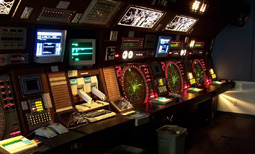 |
| Thrust-to-Weight Ratio (TWR) | The thrust-to-weight ratio is a performance metric comparing an aircraft’s engine thrust to its total weight. Higher ratios indicate better acceleration and climb capability, making this measurement crucial in fighter jets and high-performance aircraft. | 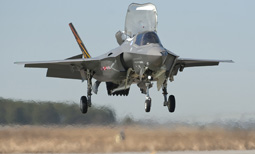 |
| Thrust Vectoring | Thrust vectoring allows pilots to manipulate an aircraft’s thrust direction, improving maneuverability. Used in advanced fighter jets and vertical takeoff aircraft, it enhances agility by enabling sharper turns, hover capabilities, and controlled descents. | 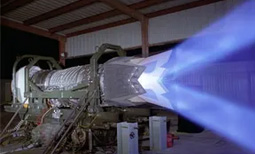 |
| Thunderstorm Avoidance Procedures | Thunderstorm avoidance involves using radar, weather reports, and ATC advisories to navigate around convective weather systems. Pilots follow minimum distance guidelines to prevent severe turbulence, lightning strikes, and hail damage. |  |
| Time of Arrival Control (TOAC) | TOAC is an air traffic management technique used to optimize arrival spacing. It ensures aircraft arrive at specific points at precise times, reducing delays and improving airspace efficiency. | 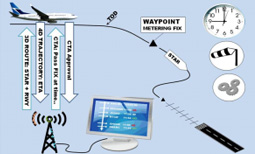 |
| Tire Pressure Monitoring System (TPMS) | TPMS in aircraft tracks the inflation status of landing gear tires. Proper tire pressure is crucial for safe takeoff, landing, and taxiing, preventing blowouts or excessive wear. |  |
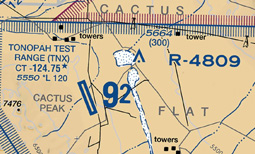
| Tonopah Test Range (TTR) | Tonopah Test Range (TTR) is a restricted military site in Nevada used for weapons testing and secret aviation programs. Managed by Sandia National Laboratories and the U.S. Air Force, it's known for stealth aircraft development, including the F-117 Nighthawk. Established during the Cold War, TTR remains active today, supporting classified defense projects and advanced military technologies. |
|
| Torque Effect (Helicopters) | Torque effect is a fundamental helicopter principle where the main rotor’s rotation generates an opposite force, causing the fuselage to spin. The tail rotor counteracts this effect, ensuring directional stability. | 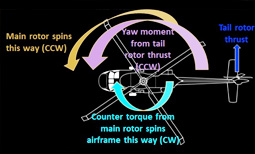 |
| Traffic Collision Avoidance System (TCAS) | TCAS is an onboard system that monitors nearby aircraft and provides collision avoidance advisories. It detects potential conflicts and instructs pilots to take corrective action to prevent midair collisions. | 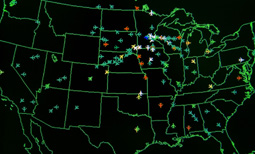 |
| Trailing Edge Flaps | Trailing edge flaps are movable panels located on the wing’s rear edge, deployed to increase lift during takeoff and landing. They allow aircraft to fly at lower speeds without stalling. | 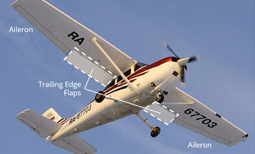 |
| Transatlantic Flight Corridor | The transatlantic flight corridor consists of designated airways used for flights between North America and Europe. These routes are managed through organized tracks that change daily based on wind patterns and air traffic demand. | 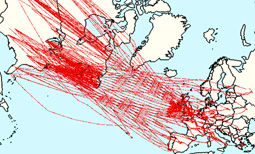 |
| Transonic Flight | Transonic flight occurs at speeds close to Mach 1, where airflow over parts of the aircraft becomes supersonic while other areas remain subsonic. This creates aerodynamic challenges, including shock waves and increased drag. | 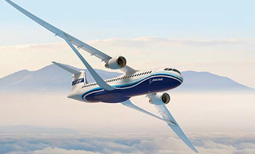 |
| Turbine Engine Stall | A turbine engine stall occurs when airflow is disrupted within a jet engine, leading to power loss or flameout. Causes include rapid throttle movements, compressor malfunctions, or bird ingestion. | 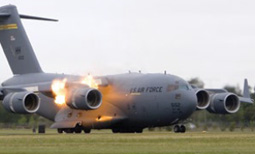 |
| Turbofan Engine | A turbofan engine is a jet propulsion system that combines a turbine engine with a fan, improving efficiency and reducing noise. It is the most common engine type in modern commercial aircraft. | 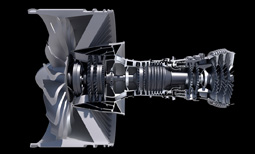 |
| Turboprop Engine | A turboprop engine uses a turbine to drive a propeller, offering fuel efficiency at lower speeds. Common in regional and cargo aircraft, turboprops are ideal for short-haul flights and rough-field operations. | 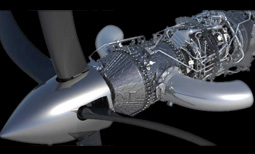 |
| Turbulence Intensity Scale | The turbulence intensity scale categorizes turbulence into light, moderate, severe, and extreme levels. Pilots and meteorologists use this scale to assess and report in-flight conditions, helping other aircraft avoid hazardous air. | 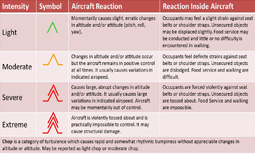 |
| Turn Radius (Aircraft Maneuverability) | Turn radius refers to the horizontal distance an aircraft requires to complete a turn at a given speed and bank angle. Smaller turn radii indicate greater maneuverability, essential for military dogfighting and aerobatic flying. | 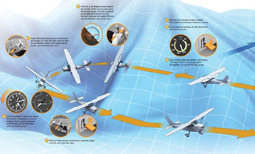 |
